The Singularity Paradox: Why Business Strategy Must Pivot from Optimization to Adaptation
For decades, the Technological Singularity—that theoretical point in time when machine intelligence surpasses human cognitive capacity—has been treated as a fringe concern for science fiction writers and futurist academics. This was a fatal strategic error. We are no longer waiting for the singularity; we are living through the initial phase of its arrival.
The core problem for today’s decision-makers is not that AI will suddenly “take over.” It is that the current business paradigm—built on the pillars of linear growth, predictable ROI, and human-centric workflows—is suffering from a fundamental mismatch with the exponential velocity of machine intelligence. If your business model relies on five-year forecasts, you are essentially navigating a supersonic jet using a paper map from 1950.
The Problem: The “Efficiency Trap” in an Exponential Age
Most enterprises currently approach AI through the lens of Efficiency: “How can we use this tool to do what we already do, but 20% cheaper?” This is a defensive, short-sighted posture. The Singularity—or more accurately, the period of “Accelerating Returns”—invalidates the logic of marginal efficiency gains.
When intelligence becomes a commodity that scales at zero marginal cost, the competitive advantage shifts away from process execution and toward architectural adaptability. Companies that are “efficient” at doing obsolete things are merely accelerating their own obsolescence. The high-stakes reality is this: we are moving from an economy of labor to an economy of intelligence capital. If your firm’s valuation is tied to human hours billed, your moat is evaporating.
Deep Analysis: The Architecture of Recursive Self-Improvement
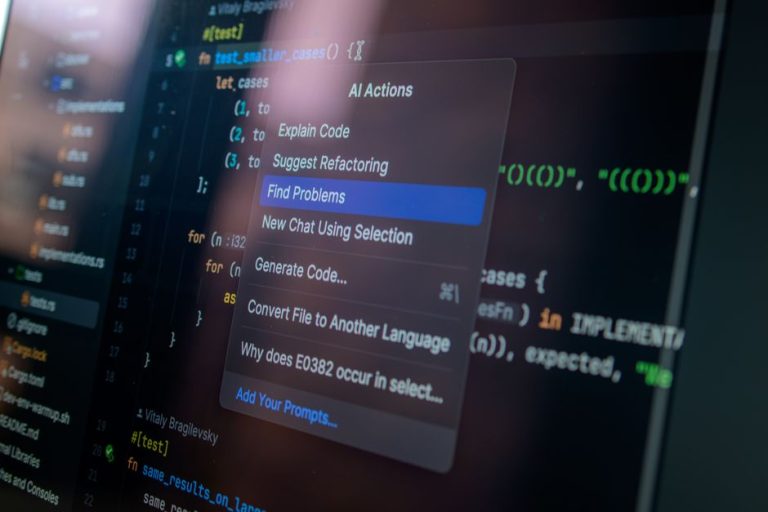
To understand the Singularity’s impact on business, we must look at the concept of recursive self-improvement. In software development, we are approaching the point where AI models can rewrite their own codebase to optimize for specific objectives without human intervention.
The Three Tiers of Cognitive Disruption
Tier 1: Automation of Labor (The Current State). AI handles repetitive, rule-based tasks. The impact is seen in operational expenditure (OpEx) reduction.
Tier 2: Augmentation of Cognition (The Transitional Phase). AI serves as a “co-pilot” for high-level decision-making. Strategy, R&D, and complex problem-solving are accelerated.
Tier 3: Autonomous Strategy (The Post-Singularity Horizon). AI systems identify market gaps, deploy capital, and adjust business models in real-time.
The risk here is not “malicious AI.” The risk is competitive displacement. When an AI-native competitor can perform market analysis, sentiment forecasting, and product iteration in milliseconds, a human-led organization with a quarterly planning cycle is effectively blind.
Expert Insights: Strategies for Asymmetric Advantage
Advanced players in the AI space are not just “integrating tools.” They are re-engineering their entire value chain to be AI-in-the-loop rather than human-in-the-loop.
1. Data Sovereignty as the New Capital
In the near future, the models will be commodity goods—every competitor will have access to the same foundational LLMs. The competitive advantage will reside in proprietary, high-fidelity data sets. You must move from “collecting data” to “curating intelligence.” Your internal logs, customer interactions, and edge-case failures are more valuable than your current product roadmap.
2. The Modular Org Structure
Traditional, hierarchical organizations are too slow to react to exponential shifts. High-performing firms are shifting toward cellular structures—small, autonomous units empowered by centralized AI oversight. This allows for rapid experimentation without the friction of bureaucratic consensus-building.
3. Managing the “Human Capital” Transition
The most dangerous mistake is treating AI as a cost-cutting tool. The winners are using AI to elevate the “cognitive floor” of their workforce. The goal isn’t to replace your analysts; it’s to force them to become architects of AI systems. The premium is shifting toward high-level intuition, ethical judgment, and complex system orchestration.
The “Singularity-Ready” Framework: A 4-Step System
To navigate this shift, leadership must move from reactive adoption to proactive integration. Use the following framework to stress-test your organization:
Audit for Fragility: Identify the parts of your business that rely on human-speed decision cycles. If a decision takes two weeks to approve, it is an existential liability.
Deploy an “Internal AI OS”: Do not use disparate, siloed tools. Build a unified infrastructure where data flows between departments in real-time, feeding a central intelligence layer that informs your dashboard.
Shift to “Outcome-Based” KPIs: Stop measuring hours, outputs, or manual KPIs. Measure the velocity of learning. How fast does your business adapt its hypothesis based on incoming market data?
Build the Human-Machine Interface: Invest in training your leadership to “speak” the language of probabilistic outcomes rather than deterministic certainty. AI works in probabilities; traditional leadership often demands false certainty.
Common Mistakes: Why Most Fail
The most common failure mode is “Tool-Centric Adoption.” Companies buy a license for a leading AI tool, hand it to their marketing department, and expect a 10x ROI. This fails because it leaves the underlying business process unchanged. You cannot digitize a broken process and expect innovation; you just get a faster, more efficient broken process.
Another critical error is “The Illusion of Control.” Leaders attempt to micromanage AI outputs to align with legacy corporate branding or outdated risk-compliance frameworks. This creates a “bottleneck of caution,” where the AI is neutered to the point of irrelevance.
Future Outlook: Where the Industry is Heading
The next decade will see the bifurcation of the global economy: those who control intelligent, self-optimizing systems, and those who provide the raw material (data/labor) for those systems.
We are approaching a state of Hyper-Personalized Markets. Eventually, the product you sell will be uniquely generated for each individual customer at the moment of interaction. Industries like finance, SaaS, and pharmaceuticals are already seeing the early ripples of this. The companies that win will be those that have effectively outsourced their “tactical thinking” to AI, allowing their human talent to focus entirely on “strategic visioning.”
Conclusion: The Only Constant is Velocity
The Technological Singularity is not a destination; it is a vector of change. It forces us to confront the reality that our traditional methods of business strategy are built for a world that no longer exists. The professional of the future is not a “subject matter expert” in the traditional sense; they are a conductor of intelligent systems.
You have two choices: continue to optimize for a linear past and be slowly outpaced by exponential competitors, or redefine your organization as an intelligence-first entity. The cost of inaction is not just lost revenue—it is the total erosion of your market relevance. The window to establish your firm’s architecture for the AI-first economy is closing. Start the audit, deploy the infrastructure, and shift the mindset. The future won’t wait for your next board meeting.