Proactive compliance reduces the risk of substantial fines associated with AIregulatory violations.
— by
Steven Haynes
Contents
1. Introduction: The shift from reactive “wait and see” strategies to proactive AI governance.
2. Key Concepts: Defining the regulatory landscape (EU AI Act, NIST AI RMF, state-level privacy laws) and the financial implications of non-compliance.
3. Step-by-Step Guide: Implementing a lifecycle-based compliance framework.
4. Case Studies: Real-world examples of regulatory intervention and the cost of negligence.
5. Common Mistakes: Why “checking the box” is dangerous.
6. Advanced Tips: Moving toward “Compliance by Design” and continuous monitoring.
7. Conclusion: The competitive advantage of regulatory maturity.
***
Navigating the AI Regulatory Maze: Why Proactive Compliance is Your Best Financial Defense
Introduction
For the past decade, the rapid deployment of Artificial Intelligence felt like a Wild West of innovation. Organizations raced to integrate machine learning models, prioritizing speed and market dominance over governance. Today, that era has come to an abrupt end. With the passage of the EU AI Act and a patchwork of emerging regulations in the United States and abroad, the cost of regulatory negligence has shifted from a hypothetical risk to a balance-sheet-threatening reality.
Proactive compliance is no longer a bureaucratic checkbox; it is a fundamental business strategy. Violations of emerging AI regulations carry fines that mirror the structure of GDPR—often reaching millions of euros or a significant percentage of global annual turnover. Organizations that treat compliance as an afterthought are not just risking fines; they are risking their reputation, their license to operate, and their long-term survival in an AI-driven economy.
Key Concepts
To understand the stakes, we must move beyond the buzzword of “AI ethics” and look at the functional requirements of AI governance. Regulatory bodies are increasingly focusing on three core pillars:
Transparency and Explainability: Can you explain how your model reached a specific decision? If your AI denies a loan or filters a job applicant, regulators demand that the logic is traceable and understandable.
Data Provenance and Bias Mitigation: Regulators are scrutinizing the quality of training data. If your dataset contains historical bias that leads to discriminatory outcomes, you are liable for the resulting harm.
Risk-Based Classification: The regulatory landscape—particularly the EU AI Act—classifies AI systems by risk level. “High-risk” applications, such as biometric identification or critical infrastructure management, are subject to stringent oversight, mandatory documentation, and continuous performance auditing.
The financial impact of failing these requirements is substantial. Beyond direct fines, companies face “regulatory disgorgement”—where profits earned from illegal AI activities must be returned—as well as the massive expense of mandatory system audits, forced model deprecation, and lengthy legal battles.
Step-by-Step Guide
Building a proactive compliance framework requires integrating governance into the technical development lifecycle. Follow these steps to safeguard your organization.
Create an AI Inventory: You cannot govern what you cannot see. Develop a comprehensive register of every AI system currently in production or under development. Document the model’s purpose, the data sources used, and the level of human oversight applied.
Implement “Compliance by Design”: Embed governance at the start of the SDLC (Software Development Life Cycle). This involves conducting Data Protection Impact Assessments (DPIAs) during the design phase, rather than retrofitting them after the system is live.
Establish a Model Validation Framework: Before any model is deployed, subject it to “stress testing.” This should include red-teaming—attempting to force the model to output biased or harmful content—and formal technical audits to ensure it meets safety standards.
Formalize Human-in-the-Loop (HITL) Processes: Where AI influences high-stakes decisions, ensure there is a clear mechanism for human review. Regulators require evidence that AI recommendations are not being implemented automatically without oversight in sensitive contexts.
Maintain Auditable Documentation: In a regulatory audit, “we think it works” is not enough. You need technical logs, version control history, and documentation of training sets. Treat your AI documentation with the same rigor as your financial audits.
Examples and Case Studies
Consider the cautionary tale of companies that have already faced the ire of regulators. While many AI-specific fines are still being adjudicated, we have seen massive enforcement actions in adjacent spaces that serve as a blueprint for AI regulation.
The core of the issue is that regulators are beginning to view AI algorithms not as “black boxes,” but as products. If a product causes harm, the manufacturer is liable.
In the financial services sector, an investment firm was recently fined millions because their algorithmic trading software, which was intended to optimize performance, accidentally triggered illegal market manipulation behaviors that the firm failed to monitor. The regulator found that while the firm didn’t “intend” for the AI to break the law, their failure to perform due diligence on the algorithm’s logic was a violation of market integrity laws.
Similarly, companies in the HR space have faced lawsuits for using automated recruitment tools that exhibited systemic gender bias. These companies were forced not only to pay settlements but were also required to destroy the datasets used to train the models—a catastrophic loss of R&D investment that could have been avoided with proactive bias testing.
Common Mistakes
Relying on “Black Box” Vendors: Many organizations assume that because they purchased an AI solution from a third-party vendor, the liability rests solely with that vendor. Regulators disagree. You are responsible for the AI tools you deploy within your infrastructure.
Treating Compliance as a One-Time Event: AI models drift. A model that was fair and accurate in January may become biased or unreliable by December as the underlying data distribution changes. Continuous monitoring is non-negotiable.
Ignoring “Shadow AI”: Marketing or engineering teams often deploy AI tools (like LLMs or automation scripts) without the knowledge of the IT or Legal departments. This “Shadow AI” represents the highest risk of regulatory violation because it exists outside of any control framework.
Prioritizing Performance over Interpretability: Engineers often choose the most complex, high-performing model (e.g., deep neural networks) even if a simpler, more explainable model would suffice. In a regulatory context, complexity is a liability.
Advanced Tips
For mature organizations, the goal is to shift from “defensive compliance” to “governance excellence.”
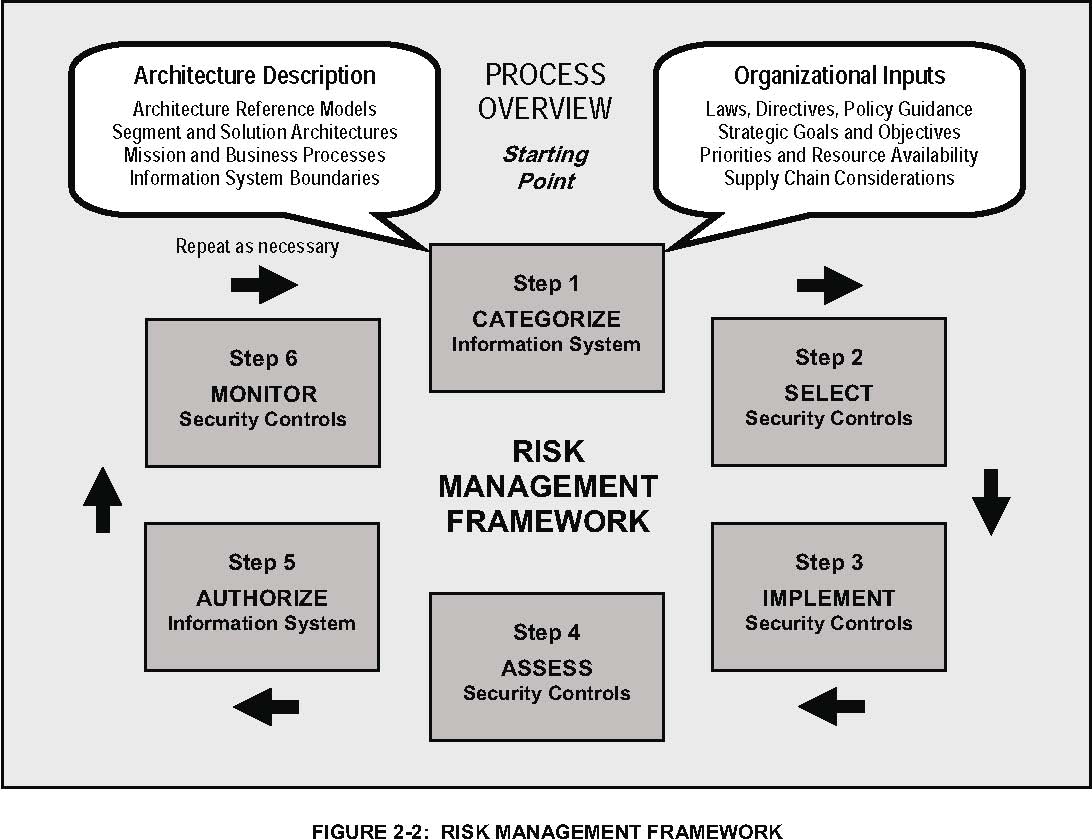
Adopt an AI Risk Management Framework (RMF): Follow established standards like the NIST AI RMF. These frameworks provide a common language for identifying, measuring, and managing AI risks that can be understood by both developers and the board of directors.
Establish an AI Ethics Board: Include not just lawyers and developers, but sociologists, ethicists, and business leaders. Their role is to ask “Should we build this?” rather than “Can we build this?” This prevents future PR disasters before they happen.
Invest in MLOps and Model Monitoring: Move away from manual checks. Automate your compliance monitoring. Use tools that track model drift, alert on statistical anomalies in real-time, and automatically log decisions for auditability. If you can prove you have a system of continuous monitoring in place, regulators are significantly more likely to view isolated errors as “unavoidable anomalies” rather than “systemic negligence.”
Conclusion
The regulatory landscape for artificial intelligence is hardening, and the window for organizations to get their houses in order is closing. The financial risks—fines, forced divestment, and legal remediation—are merely the surface-level dangers. The deeper risk is the loss of consumer trust and the potential destruction of valuable intellectual property through forced model decommissioning.
Proactive compliance is the only viable path forward. By treating governance as a core component of your technical strategy—rather than a late-stage legal requirement—you protect your bottom line and gain a competitive edge. Organizations that demonstrate high levels of AI maturity will be the ones that survive, thrive, and scale in an era where trust is the most valuable currency in technology.



Leave a Reply