
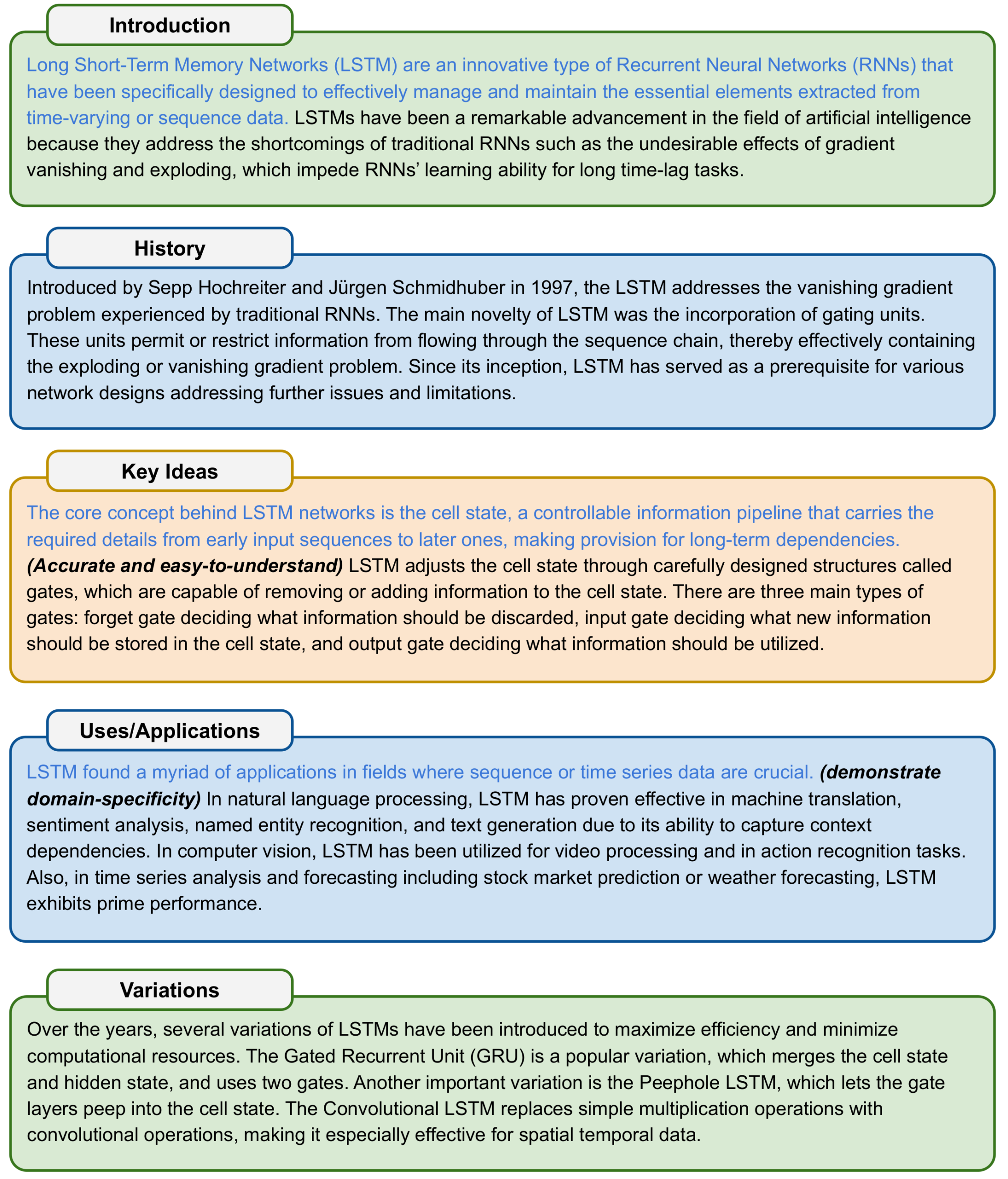
Evaluating the Quality of Natural Language Explanations: The Dual Pillar Framework
Introduction
In the era of Generative AI, we are flooded with machine-generated explanations. Whether an AI is summarizing a legal contract, justifying a medical diagnosis, or explaining a complex code snippet, the ability to generate text is no longer the primary hurdle—reliability is. As these explanations become embedded in professional workflows, our ability to critically evaluate them determines the difference between a productivity booster and a liability.
Quality in natural language explanations rests on two non-negotiable pillars: linguistic coherence and factual accuracy. An explanation that sounds perfect but is fundamentally wrong is a “hallucination.” Conversely, an explanation that is factually correct but incomprehensible is useless. Evaluating these outputs requires a systematic approach that moves beyond intuition into rigorous verification.
Key Concepts
To evaluate natural language explanations, we must distinguish between how the message is delivered and what the message contains.
Linguistic Coherence: This refers to the structural integrity and readability of the text. A coherent explanation flows logically, uses precise terminology, and maintains a consistent tone. It is not merely about correct grammar; it is about how effectively the explanation bridges the gap between complex information and the reader’s understanding. If the reader feels lost or requires constant re-reading, the coherence is compromised.
Factual Accuracy: This is the degree to which the explanation aligns with objective truth or established source data. In AI, this is often compromised by “grounding” issues—where the model draws from its training data rather than the specific context provided. Factual accuracy is binary; an explanation cannot be “mostly” correct if it misrepresents a critical constraint or causal relationship.
The marriage of coherence and accuracy is the “Golden Ratio” of communication. Without coherence, facts remain isolated data points; without accuracy, coherence is merely a sophisticated facade for misinformation.
Step-by-Step Guide: The Evaluation Framework
Evaluating an explanation requires a structured process. Use this workflow to assess any machine-generated or human-written complex explanation.
- Verify Source Grounding: Before reading the explanation, identify the source material. If the explanation is based on a specific document, perform a “source-trace.” Can every claim in the explanation be mapped to a specific sentence or data point in the source? If not, the explanation is speculative.
- Assess Structural Logic: Examine the explanation’s flow. Does it follow a logical sequence—such as claim-evidence-conclusion, or problem-cause-solution? A high-quality explanation should provide a clear “map” of the logic at the beginning.
- Test for “Semantic Drift”: Check if the explanation uses synonyms or generalizations that subtly alter the meaning. For example, replacing “may” with “will” in a legal context is a form of semantic drift that destroys accuracy.
- Evaluate Terminological Consistency: Check for the consistent use of technical terms. If the explanation uses three different terms to describe the same process, it introduces cognitive load and reduces the user’s ability to retain the information.
- Apply the “Feynman Technique”: Read the explanation and try to explain it back in your own words. If you find yourself needing to fill in logical gaps to make it make sense, the original explanation lacks sufficient clarity or evidence.
Examples and Real-World Applications
Application: Financial Reporting
In financial auditing, an AI might generate a summary of a balance sheet. A coherent explanation might state: “The company saw a growth in revenue, driven by aggressive expansion.” However, a fact-check might reveal that the revenue growth was actually driven by a one-time divestment of assets. The explanation was coherent but factually misleading. A high-quality explanation would qualify the statement: “The company reported revenue growth, which was primarily attributed to one-time asset divestment rather than core operational expansion.”
Application: Technical Documentation
In a software development context, an explanation of a complex API function might be grammatically flawless but fail to mention a mandatory prerequisite argument. Here, the linguistic coherence is high, but the functional accuracy is low. The evaluator must check for “negative constraints”—what the explanation omits—as much as what it explicitly states.
Common Mistakes
- The Fluency Bias: We are hard-wired to trust text that is written well. High-quality prose can “mask” missing data. Never assume that because a text reads smoothly, it is factually sound.
- Confirmation Bias: We tend to accept explanations that align with our existing expectations. When evaluating an explanation, play “devil’s advocate” and actively look for evidence that contradicts the explanation’s conclusion.
- Ignoring Contextual Constraints: A generic, accurate explanation is often inferior to a specific, accurate one. If an explanation fails to address the specific user constraints (e.g., budget, time, or technical stack), it is effectively inaccurate for that user’s situation.
- Failure to Verify Implicit Assumptions: Most explanations rely on unstated assumptions. Always ask: “What does this explanation assume I already know?” If those assumptions are incorrect, the entire explanation fails.
Advanced Tips for Professional Evaluators
Use Multi-Persona Verification: If you are evaluating a high-stakes explanation, view it through the lens of different personas. How would a layperson interpret this? How would an expert? If the explanation is accurate for the expert but incoherent for the layperson, it needs refinement for its target audience.
Perform Contrastive Checking: To check for accuracy, ask the model (or rewrite the content) to explain the opposite of the claim. If you ask an AI to explain why a strategy failed, and then ask it to explain why it might have succeeded, you can often find contradictions in the logic that highlight where the model is guessing rather than synthesizing facts.
Quantify the “Density of Claims”: High-quality, dense explanations pack a lot of information into few words. If an explanation is wordy but says very little, it is likely “fluff.” A good metric is to count the number of verifiable facts per 100 words. A low count indicates a lack of substance.
Conclusion
Evaluating the quality of natural language explanations is an essential competency in the modern knowledge economy. By separating linguistic coherence from factual accuracy, you move from being a passive consumer of information to an active auditor of truth. The goal is not just to identify errors, but to foster a culture of precision and clarity. As we delegate more of our thinking to algorithmic systems, our role as the final filter—the arbiter of coherence and the guardian of facts—becomes more vital than ever.
Remember: If an explanation is hard to verify, it is hard to trust. Prioritize transparency, source grounding, and logical structure, and you will ensure that the information you rely on actually serves your objectives rather than obscuring the truth.
Further Reading




Leave a Reply