

Securing the Pipeline: A Strategic Incident Response Plan for Machine Learning
Introduction
As machine learning (ML) models move from experimental sandboxes to the backbone of enterprise operations, they have become high-value targets for cyberattacks. Unlike traditional software, where breaches involve unauthorized access to databases or code, ML security breaches involve model manipulation, data poisoning, and adversarial inference.
If your organization relies on predictive analytics, recommendation engines, or automated decision-making, a standard IT incident response plan is insufficient. You need a dedicated framework that accounts for the unique vulnerabilities of neural networks and training pipelines. This article outlines a rigorous, actionable plan to detect, contain, and recover from security incidents specifically targeting your ML infrastructure.
Key Concepts in ML Security
To respond to a breach, you must first understand the attack surface. ML security differs from traditional cybersecurity in three fundamental ways:
- Data Poisoning: An attacker injects malicious samples into the training dataset to bias the model, create backdoors, or degrade performance over time.
- Model Inversion and Extraction: Attackers query the model repeatedly to reconstruct private training data or “steal” the model architecture and weights.
- Adversarial Evasion: The use of specially crafted input perturbations—often invisible to the human eye—that cause the model to make incorrect predictions.
Effective incident response requires moving beyond “uptime” metrics. You must monitor for model drift, unexpected confidence intervals, and anomalous query patterns that suggest an extraction attempt is underway.
Step-by-Step Guide to ML Incident Response
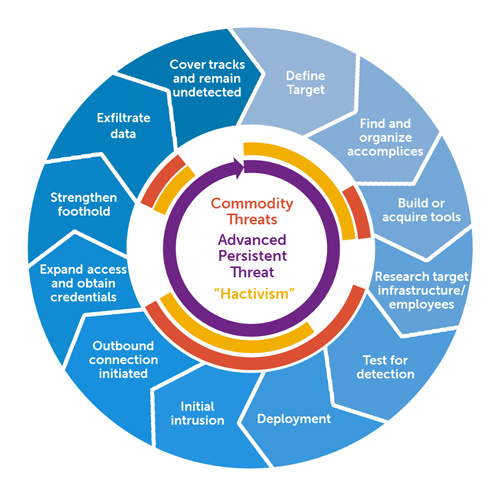
A successful response follows a structured lifecycle. Follow these steps to build your ML-specific incident response plan.
- Preparation and Baseline Establishment: Establish a “Golden Model” baseline. You cannot detect a compromise if you don’t have a record of how the model performs under normal, clean conditions. Log every version of training data and the exact hyper-parameters used.
- Identification and Detection: Implement automated alerts for Out-of-Distribution (OOD) inputs. If your model suddenly encounters a flood of inputs that deviate significantly from your training distribution, trigger an investigation. Monitor API latency—a sudden spike in queries from a single source may indicate a model extraction attack.
- Containment: If a breach is suspected, isolate the inference endpoint. Redirect traffic to a secondary, “shadow” model or a static, rule-based fallback system. Do not immediately delete the compromised model; preserve the state for forensic analysis.
- Eradication and Analysis: Perform a “Model Audit.” Check the integrity of your training data lineage. Use forensic tools to compare the model weights against the “Golden Model” to identify backdoors or unauthorized parameter shifts.
- Recovery and Retraining: Sanitize the training data. Remove tainted samples identified during the eradication phase. Re-train the model from a known-secure checkpoint. Implement additional layers of defense, such as input sanitization filters, before redeploying.
- Lessons Learned: Conduct a post-mortem. Was the breach caused by a compromised data lake, or was it a logic flaw in the model itself? Update your adversarial training protocols to include the specific type of attack experienced.
Examples and Real-World Applications
“Imagine an autonomous logistics platform that uses an image recognition model to identify obstacles. An attacker applies physical ‘adversarial stickers’ to stop signs, causing the model to misclassify them as speed limit signs. The incident response team doesn’t just need to reboot the server; they need to retrain the visual perception module using adversarial examples that include these stickers.”
In another scenario, a financial firm’s fraud detection model starts approving fraudulent transactions. Forensic analysis reveals that an attacker successfully injected “synthetic” fraudulent transactions into the training pipeline. The incident response plan here involves rolling back the model version and conducting a deep-dive audit of the ETL (Extract, Transform, Load) process that supplies the training data.
Common Mistakes in ML Response
- Ignoring the Data Pipeline: Teams often focus only on the model code. If your data ingestion pipeline is insecure, the model is inherently compromised. You must secure the data lineage.
- Relying on Black-Box Monitoring: Traditional network monitors cannot see “inside” the ML process. You need specialized observability tools that monitor model confidence and prediction variance.
- Failure to Version Control Everything: If you cannot recreate the exact state of your model at the time of the breach, you cannot effectively perform forensic analysis or prove compliance.
- Neglecting Adversarial Robustness: Treating security as an “add-on” rather than building it into the training phase. If your model isn’t trained against adversarial examples, it is effectively defenseless from day one.
Advanced Tips for ML Resilience
To take your ML security to the next level, integrate Red Teaming into your MLOps cycle. Actively employ “adversarial training,” where your model is intentionally exposed to malicious perturbations during the training phase to harden it against evasion attacks.
Furthermore, consider implementing Differential Privacy mechanisms. This adds noise to your training data in a way that prevents attackers from reconstructing private individual data records through model inversion attacks. It is a mathematical guarantee that provides a robust safety layer against data leakage.
Finally, move toward Immutable Model Artifacts. Once a model is trained and validated, cryptographically sign the model file. If the signature doesn’t match during deployment, the inference server should refuse to load the model, effectively blocking unauthorized model replacement attacks.
Conclusion
Machine learning security is no longer a niche concern for researchers; it is a fundamental pillar of operational integrity for any modern business. By establishing a dedicated incident response plan, you shift your posture from reactive chaos to proactive defense.
Remember that the core of your response plan should be the integrity of the data, the versioning of the model, and the ability to detect anomalous behavior in real-time. Start by cataloging your training pipelines, implement rigorous monitoring for model inputs, and ensure that your team is prepared to pivot to fallback systems when the unexpected occurs. In the world of AI, speed of response is the difference between a minor glitch and a catastrophic system failure.
Further Reading




Leave a Reply