

Securing the Brain: Restricting Physical and Logical Access to Machine Learning Hardware
Introduction
For years, the cybersecurity conversation surrounding machine learning (ML) has focused almost exclusively on adversarial inputs—tricking a model into misclassifying an image or poisoning a training dataset. However, as organizations transition from experimental pilots to deploying high-value, proprietary models in production, the physical and logical security of the underlying hardware has become the most critical, yet often overlooked, attack vector.
When your machine learning model is the “secret sauce” of your business, the hardware hosting that model is effectively a digital vault. Whether it is a GPU cluster in a colocation facility or an edge device on a factory floor, if an attacker gains physical or logical access to the hardware, they can exfiltrate model weights, inject backdoors, or steal sensitive training data. Securing this hardware is no longer just an IT task; it is a fundamental business imperative.
Key Concepts
To understand why hardware security is paramount for ML, we must differentiate between two core exposure points:
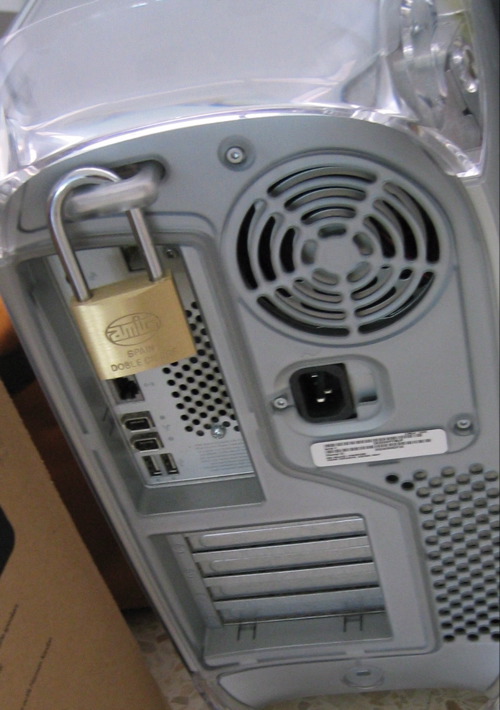
Physical Access: This involves direct, hands-on interaction with the server, rack, or edge device. An attacker with physical access can bypass software-level protections by physically removing storage drives, intercepting data via side-channel attacks (like power analysis or electromagnetic emissions), or performing a cold-boot attack to dump RAM contents.
Logical Access: This refers to the pathways used to interface with the machine—SSH, API endpoints, management interfaces (IPMI/iDRAC), and internal network protocols. In many ML deployments, logical security is weakened by “convenience” configurations, such as open management ports or overly permissive service accounts required for GPU drivers to communicate with orchestrators like Kubernetes.
The “Model Weight” Problem: Unlike traditional application code, an ML model is essentially a massive set of weights (parameters). If these are exfiltrated, the IP is permanently stolen. Traditional software is often protected by obfuscation, but once an attacker has your weights, they have the model in its entirety, allowing them to run it locally, reverse-engineer its decision logic, or find vulnerabilities without ever querying your API.
Step-by-Step Guide: Implementing a Hardened ML Environment
- Physical Hardening of the Infrastructure: Place servers in locked, tamper-evident cabinets with biometric or keycard logging. Utilize chassis-intrusion detection sensors that trigger an alert and wipe sensitive cryptographic keys (stored in a Trusted Platform Module or TPM) if the server casing is opened.
- Implement Hardware-Rooted Trust: Utilize Secure Boot and hardware security modules (HSMs). Ensure the model weights are encrypted at rest using keys that are only available after a successful hardware-based integrity check. If the bootloader has been tampered with, the decryption keys should never be released.
- Segment the Network: Treat your ML inference servers as “tier-zero” assets. Place them on isolated VLANs with strict micro-segmentation. Use a firewall to ensure the server can only communicate with authorized API gateways, and block all direct SSH or management access from the public internet or general corporate networks.
- Restrict Management Interfaces: Disable out-of-band management interfaces (IPMI, iDRAC, ILO) or place them on a physically separate, air-gapped management network. These interfaces are frequent targets for attackers because they often run outdated firmware with known vulnerabilities.
- Enforce Least Privilege for Logical Access: ML workloads often require specific drivers (e.g., NVIDIA CUDA). Ensure that the service account running the inference engine has the minimum set of permissions necessary to execute code and communicate with the GPU. Never run these processes as root or with administrative privileges.
- Enable Auditing and Monitoring: Implement centralized logging that captures not just software logs, but hardware-level telemetry. Monitor for unauthorized memory access, GPU heat spikes (which can indicate heavy, unauthorized computation), and unexpected physical access logs.
Examples and Case Studies
Consider a healthcare company deploying a model that analyzes diagnostic imaging. To comply with HIPAA, they must not only protect the images but the model itself, which identifies rare patterns in patient health. By implementing a Trusted Execution Environment (TEE), such as Intel SGX or NVIDIA Confidential Computing, the company ensures that the model weights are decrypted only inside a protected portion of the CPU/GPU. Even if a system administrator or a malicious actor gains root access to the OS, they cannot dump the memory of the ML process to extract the model weights.
In another scenario, a manufacturing firm utilizes edge computing for predictive maintenance on heavy machinery. These devices are physically located in public-facing or remote areas. By using physical “tamper-responsive” chips, the hardware automatically detects if a local connection is made to the debug port (JTAG). If detected, the device triggers a secure erase of its local model and sensitive data, preventing an attacker from cloning the device’s logic for competitive intelligence.
Common Mistakes
- Relying on Perimeter Security: Assuming that a secure data center is enough is a fallacy. Insider threats and compromised supply chains require a “Zero Trust” approach where hardware itself is assumed to be vulnerable.
- Default Firmware Configurations: Leaving default passwords on server management controllers is the fastest way to lose control of an entire rack of GPUs.
- Over-Permissioned Containers: Running ML models in containers that have access to the host kernel or host devices without specific, hardened constraints allows an attacker who exploits a library vulnerability to break out into the host system.
- Ignoring Side-Channel Attacks: For high-stakes models, failing to consider that an attacker could measure power consumption to infer the internal state of the model is a significant oversight. While rare, this is a sophisticated way to reconstruct a model.
Advanced Tips for ML Security
Confidential Computing: Move beyond software-based encryption. Use Confidential Computing platforms that encrypt data while it is in use. By running your ML inference within a secure enclave, the model weights and the input data are never visible to the host operating system, hypervisor, or cloud provider.
Model Watermarking and Obfuscation: Even if you protect your hardware, assume that a breach is possible. Integrate digital watermarks into your model layers. If the model is exfiltrated and run elsewhere, the watermarks allow you to identify the source of the leak. Furthermore, use model pruning and architectural obfuscation to make the stolen model difficult for an attacker to understand or utilize effectively.
Automated Integrity Verification: Don’t rely on annual audits. Use automated tools that perform continuous remote attestation. This ensures that the hardware and firmware stack remain in a known-good state. If the checksum of the kernel or the model files changes, the system should automatically transition into a read-only or “tarpit” state until investigated.
Conclusion
The security of your machine learning models is inextricably linked to the security of the hardware they inhabit. As models become more valuable, the incentive for adversaries to bypass your software controls and target the physical and logical layers of your infrastructure increases significantly.
By treating your hardware as a hardened perimeter, employing a Zero Trust architecture, and leveraging advanced technologies like Confidential Computing, you can create a robust defense that protects your intellectual property and maintains the integrity of your AI-driven decisions. Remember: in the world of high-stakes machine learning, your hardware is your final line of defense. Build it to be as resilient as the models it serves.




Leave a Reply