The Holy Grail of Energy: Why Artificial Photosynthesis is the Next Trillion-Dollar Infrastructure Pivot
For two centuries, global economic growth has been tethered to the thermodynamic inefficiency of combustion. We dig, we burn, we emit. Even our transition to renewables—wind and solar—is plagued by the “intermittency trap”: the inability to store energy at scale without massive, resource-intensive battery arrays.
But what if we could bypass the battery entirely? What if we could treat the sun not merely as a source of electricity, but as a manufacturing catalyst?
Artificial photosynthesis (AP) is no longer a fringe academic curiosity confined to university labs. It is emerging as the critical infrastructure layer for the next wave of industrial decarbonization. For investors and entrepreneurs, the transition from silicon-based power generation to molecular-based energy storage represents the most significant shift in industrial chemistry since the Haber-Bosch process.
The Core Inefficiency: The Intermittency and Density Problem
The primary constraint facing the current “Green Transition” isn’t the generation of electrons; it is the storage and transport of energy. Batteries, while revolutionary for consumer electronics and EVs, suffer from poor energy density and high reliance on geopolitical chokepoints (lithium, cobalt, nickel).
Artificial photosynthesis solves this by mimicking nature’s elegant solution: converting photons directly into chemical bonds. Instead of forcing solar energy into a lithium-ion cell, AP systems utilize catalysts to split water and capture CO2, converting them into liquid solar fuels—hydrogen, syngas, methanol, or ethanol.
The high-stakes reality: Any enterprise relying on long-haul logistics, heavy manufacturing, or chemical feedstock production will be forced to internalize the cost of carbon. Artificial photosynthesis offers the only pathway to produce “drop-in” carbon-neutral fuels that utilize existing distribution infrastructure. This is not just a climate play; it is a hedge against the inevitable regulatory and supply chain volatility of the coming decade.
Deconstructing the Technology: The Catalyst Architecture
To understand where the value lies, one must understand the three primary archetypes of artificial photosynthesis systems currently moving toward pilot-scale viability:
1. Photoelectrochemical (PEC) Cells
PEC systems integrate the light-harvesting semiconductor directly with the catalyst. This is the most efficient configuration but faces significant challenges in durability. The electrolyte environments are often corrosive, leading to rapid catalyst degradation. Companies solving the “material interface” problem here—finding robust, low-cost semiconductors—are the primary targets for long-term venture capital.
2. Photovoltaic-Electrolysis (PV-E) Hybrids
This is the “systems integration” approach. By coupling high-efficiency silicon PV panels with an electrolyzer, we can achieve high-volume hydrogen production today. The challenge here is cost. While it works at scale, it lacks the elegance of direct chemical conversion and is susceptible to the same capital expenditure (CapEx) pressures as any heavy infrastructure project.
3. Biotic-Abiotic Hybrids
This is the frontier. By using engineered bacteria to “eat” hydrogen or electricity and output complex hydrocarbons, researchers are effectively outsourcing the manufacturing process to biology. This represents the intersection of Synthetic Biology and Energy—a sector currently seeing an explosion in specialized IP filings.
The Expert’s Edge: Assessing Scalability and Unit Economics
Most analysts evaluate energy technologies based on Levelized Cost of Energy (LCOE). This is a mistake. In the realm of artificial photosynthesis, you must evaluate based on Levelized Cost of Chemical Feedstock (LCCF).
The strategic value lies not in replacing the electrical grid, but in displacing fossil-based feedstocks. If your company consumes methanol, ammonia, or ethylene, you are exposed to natural gas price shocks. An artificial photosynthesis system—even at a 20% premium—provides a “synthetic hedge” against volatility.
The “Stability-Efficiency Trade-off”
Experienced industry operators know the trap: labs often report 20%+ solar-to-fuel (STF) efficiency in highly controlled, pressurized environments using noble metals like Iridium or Platinum. In the field, these metrics collapse. The real winners are not those achieving the highest lab-bench efficiency, but those focusing on Earth-abundant catalysts—specifically nickel, iron, and cobalt-based architectures that can survive thousands of hours of operation without maintenance.
The Roadmap: A Strategic Implementation Framework for Decision-Makers
If you are an investor or a leader looking to position your firm for this shift, follow this hierarchical framework:
Identify Feedstock Vulnerability: Conduct a audit of your supply chain. Where do you use hydrogen, syngas, or synthetic hydrocarbons? That is your primary area of risk.
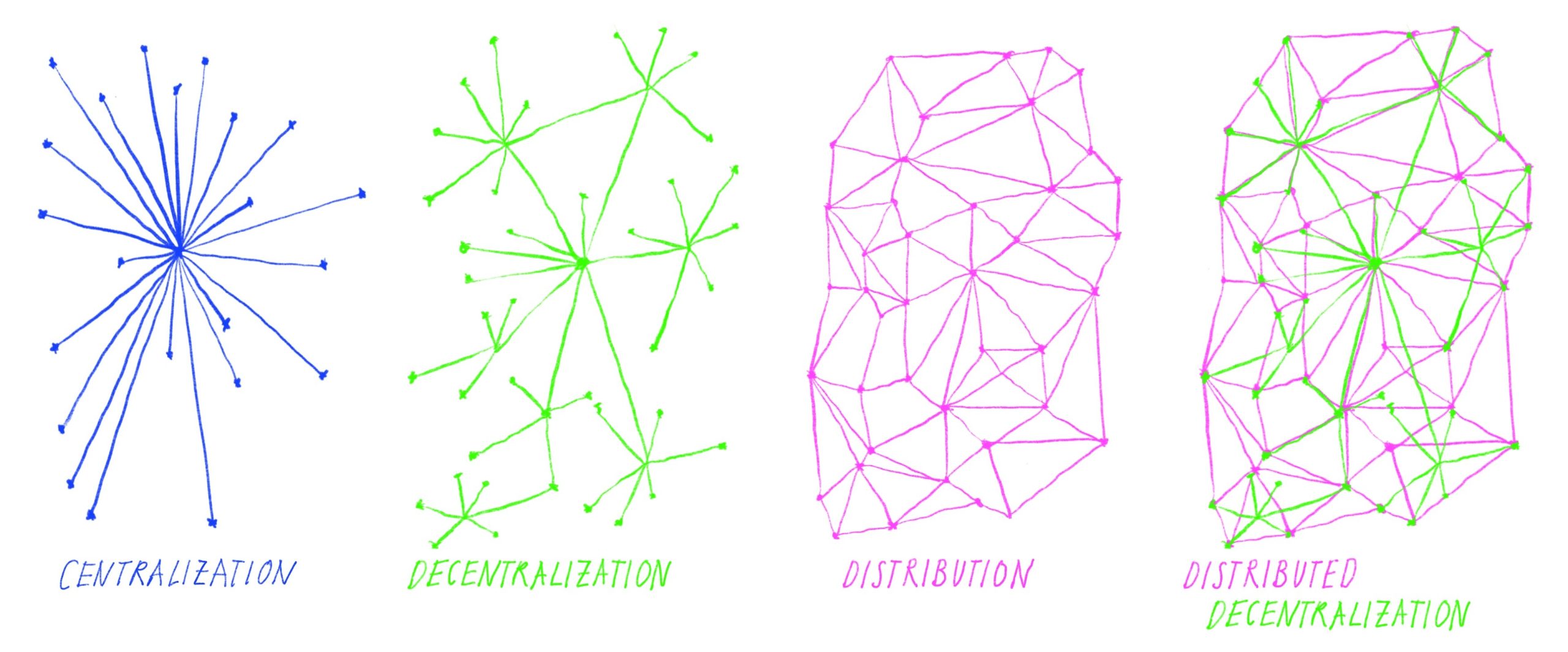
Assess Decentralization Potential: Unlike centralized refineries, AP systems are modular. Evaluate if your operations can support on-site production. Small-scale, localized production avoids the “transportation premium” that currently kills hydrogen economics.
Monitor IP Consolidation: Track the movement of patents in the “Gas Diffusion Electrode” (GDE) space. The GDE is the heart of the cell; the companies that optimize the gas-liquid-solid interface are the ones likely to become the “Intel Inside” of the next generation of fuel reactors.
Capital Allocation: Prioritize firms operating at the Pilot Plant stage (Technology Readiness Level 6-7). Avoid pure-play R&D firms unless you are equipped for 10-year holding periods.
Common Pitfalls: Why Most AP Projects Fail
The graveyard of “green energy” startups is littered with those who fell for these three traps:
The Noble Metal Trap: Designing a system that works perfectly with Platinum catalysts. If the catalyst costs more than the fuel it produces, the business model is dead on arrival.
Neglecting Gas Separation: Capturing a fuel is one thing; separating it from the reactant stream (e.g., separating oxygen from hydrogen or methanol from water) is energy-intensive. Systems that ignore downstream separation costs are inherently unscalable.
Ignoring the “Maintenance Tax”: In the chemical industry, downtime is terminal. Systems that require manual catalyst cleaning or recalibration every 500 hours will never compete with the “set-and-forget” reliability of incumbent chemical plants.
Future Outlook: From Laboratory to Gigaton Scale
The trajectory of artificial photosynthesis mirrors the early days of the solar industry: high costs, complex materials, and skeptical incumbents. However, we are approaching a “tipping point” dictated by the convergence of Artificial Intelligence and Material Science.
AI-driven high-throughput screening of alloy catalysts has compressed the development cycle for new materials from years to months. We are seeing the discovery of light-harvesting materials that were theoretically impossible five years ago. As these technologies mature, we will shift from “Energy-as-a-Service” to “Matter-as-a-Service,” where carbon dioxide is effectively treated as a valuable raw material rather than a waste liability.
The Decisive Takeaway
Artificial photosynthesis is not about “saving the planet”—it is about decoupling industrial production from the constraints of extractive geology. The companies and investors who recognize that the future of energy is molecular rather than electrical will control the next generation of industrial value chains.
The time to begin the assessment of your firm’s exposure to volatile fossil-based inputs is now. Don’t wait for the technology to reach commodity pricing; by then, the strategic advantage will have already been consolidated by those who built the infrastructure today.
The future belongs to those who can synthesize, not just burn.