Conclusion: Maintaining model health in production environments.
Detecting the Invisible: Using Anomaly Detection to Monitor Probability Distributions
Introduction
In modern machine learning, we often obsess over accuracy, precision, and recall. We spend months training models, fine-tuning hyperparameters, and curating datasets. Yet, the moment a model is deployed, it faces a silent killer: distribution drift. The world is non-stationary, meaning the data your model sees in production rarely matches the data it saw during training.
Most monitoring systems focus on output labels (e.g., “how many fraudulent transactions did we flag?”). However, true insight lies deeper: in the probability distributions. By treating the model’s confidence scores as a feature vector, you can identify anomalies before they result in catastrophic business failures. If your model suddenly becomes “unsure” about input it should be confident about, you don’t have a data problem—you have a signal that your environment has shifted.
Key Concepts
When a classifier (like a logistic regression or neural network) makes a prediction, it outputs a probability distribution across classes, usually through a Softmax layer. This vector represents the model’s “belief” about the input.
Anomaly detection in this context involves monitoring the stability of these belief states. If a system is designed to classify images into “Dog” or “Cat,” it should consistently produce high-probability scores (near 1.0 or 0.0). If you suddenly see a surge in predictions where the model assigns 0.5 to both categories, the model is entering an “uncertainty trap.”
To detect these shifts, we use metrics that measure the distance between the training-time probability distribution and the live inference distribution:
KL-Divergence (Kullback-Leibler): A measure of how one probability distribution differs from a reference distribution.
Jensen-Shannon Distance: A symmetric, smoothed version of KL-Divergence that is more stable for bounded probability distributions.
Wasserstein Distance: Useful when the probability distributions represent rankings or ordered categories.
Step-by-Step Guide
Monitoring probability distributions requires a systematic approach to ensure you aren’t just reacting to noise.
Baseline the Distribution: Use your validation set to calculate the “Golden Distribution” of your model’s predictions. Store the mean and variance of the probability vectors across all classes.
Compute Real-Time Divergence: As requests hit your model, buffer the predictions in windows (e.g., every 1,000 requests). Calculate the Jensen-Shannon distance between the current window and your baseline.
Establish Statistical Thresholds: Avoid hard-coding thresholds. Use the 3-sigma rule (mean + 3 standard deviations) or interquartile ranges (IQR) to identify when a distribution shift is statistically significant.
Trigger Alerting: When the distance exceeds your threshold, initiate an automated check. Does the input data also show a covariate shift? If the input data is normal but the probability distribution is weird, your model’s assumptions are no longer valid.
Retrain or Investigate: If the anomaly persists, it indicates that the underlying patterns have changed (concept drift), necessitating a model retraining cycle or an update to the feature engineering pipeline.
Examples and Case Studies
Fraud Detection Systems: A banking model trained to predict credit card fraud expects a specific distribution of “legit” vs. “fraud” scores. If a new, sophisticated attack pattern emerges, the model may struggle, pushing probabilities from the extremes toward the center (0.5). By detecting this “clustering around uncertainty,” security teams can pause the model and revert to rule-based fallback systems before attackers exploit the drift.
Medical Diagnostics: Consider an AI used to detect tumors in X-rays. If the hospital upgrades its X-ray hardware, the noise signature in the images changes. While the images still look like X-rays, the model’s internal probability distribution for “Malignant” vs. “Benign” may shift. Detecting this distribution anomaly alerts technicians to calibrate the model to the new hardware before it misses a single diagnosis.
Anomaly detection isn’t about stopping the model; it is about knowing when the model has lost its intuition.
Common Mistakes
Ignoring Seasonality: Some distributions shift naturally. Retail models will show vastly different probability distributions on Black Friday compared to a typical Tuesday. Ensure your baseline accounts for temporal cycles.
Sensitivity to Noise: Individual predictions can be erratic. Never trigger alerts on a single data point. Always use sliding windows or cumulative moving averages to detect persistent shifts.
The “Confidence vs. Accuracy” Fallacy: High confidence does not always equal high accuracy. A model can be “confidently wrong.” Anomaly detection should focus on the change in distribution, not the validity of the predictions themselves.
Advanced Tips
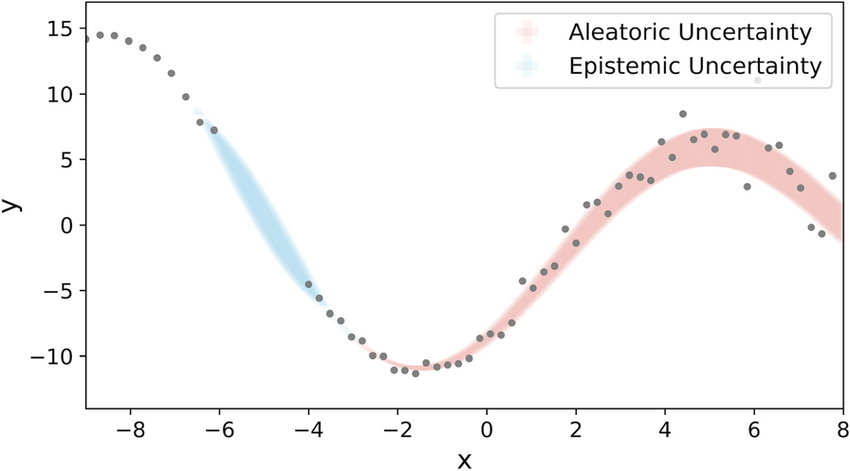
To move beyond simple divergence metrics, consider Bayesian Neural Networks (BNNs) or Monte Carlo Dropout. Instead of getting a single point estimate, these methods provide a probability distribution over the weights themselves. This allows the model to output a “confidence interval” for its prediction.
If you cannot implement a full Bayesian architecture, you can use Ensemble Variance. Run five versions of your model (or the same model with different initialization seeds) on the same input. If the models disagree wildly, the input is likely an “Out-of-Distribution” (OOD) sample. High variance between ensemble members is a powerful, computationally affordable proxy for uncertainty.
Furthermore, use Dimensionality Reduction (t-SNE or UMAP) to visualize your latent spaces. If your anomaly detection system flags a drift, projecting the model’s hidden states into 2D space often reveals the “why” behind the shift, showing you exactly how the input space has migrated away from your training clusters.
Conclusion
Monitoring the probability distributions of your machine learning models is the hallmark of a mature MLOps pipeline. By moving beyond simple accuracy metrics and embracing the statistical analysis of your model’s “beliefs,” you transform your monitoring from a reactive checklist into a proactive diagnostic tool.
Start by baselining your distributions, implement divergence metrics in a sliding window, and always distinguish between expected environmental noise and structural concept drift. In an era where data changes as quickly as it is generated, your ability to detect when to stop trusting a model is just as important as the ability to build one.





Leave a Reply