Standardized incident response plans improve the resilience of AI-dependent critical infrastructure.
— by
Steven Haynes
### Article Outline
1. Introduction: The paradigm shift from human-led to AI-augmented critical infrastructure and the resulting “black box” risks.
2. Key Concepts: Defining “AI-dependent infrastructure” and why generic IT disaster recovery plans fail in AI environments.
3. Step-by-Step Guide: A framework for building an AI-specific Incident Response Plan (IRP).
4. Examples and Case Studies: Hypothetical but realistic scenarios (e.g., adversarial data poisoning in smart grids).
5. Common Mistakes: Pitfalls like over-reliance on automation and the “human-in-the-loop” paradox.
6. Advanced Tips: Implementing model observability, versioning, and automated rollback triggers.
7. Conclusion: Final thoughts on resilience as a continuous cycle rather than a destination.
***
Standardized Incident Response Plans: Strengthening the Resilience of AI-Dependent Critical Infrastructure
Introduction
Modern critical infrastructure—spanning energy grids, water treatment facilities, and transportation networks—has undergone a radical transformation. Where once these systems relied on rigid, rule-based automation, they now leverage Artificial Intelligence (AI) to optimize efficiency, predict demand, and manage complex variables in real-time. However, this shift introduces a new category of systemic risk: the “black box” failure.
When an AI model drift occurs, or an adversarial actor feeds poisoned data into a predictive maintenance algorithm, the consequences go far beyond a dropped database connection. They manifest as physical instability, supply chain disruption, and safety threats. In this environment, an organization’s resilience is no longer defined by how quickly it can reboot a server, but by how effectively it can diagnose, contain, and override autonomous decision-making processes. Standardized Incident Response Plans (IRPs) tailored for AI are the essential bridge between technological speed and operational safety.
Key Concepts
To build an effective response, we must first distinguish between traditional IT incidents and AI-dependent incidents. In standard IT, you are typically dealing with binary outcomes: the system is either up or down. In AI-dependent infrastructure, you are dealing with probabilistic outcomes.
AI-Dependent Infrastructure refers to systems where predictive models directly influence physical control loops. These models are susceptible to “silent failures”—situations where the system remains “online” but provides optimized yet fundamentally incorrect outputs.
A Standardized AI-IRP is a formal, documented procedure that defines specific triggers for manual intervention, forensic data preservation protocols for non-deterministic systems, and clear lines of authority for overriding autonomous decisions. Unlike static disaster recovery plans, these documents must be dynamic, accounting for model updates, data pipeline changes, and evolving threat vectors like adversarial machine learning.
Step-by-Step Guide: Building Your AI-Incident Response Framework
Identify AI Assets and Failure Modes: Conduct a thorough audit to map every model used in critical operations. Document the failure modes: Is the model prone to drift? Does it lack explainability? Define the “threshold of harm” for each model where the system must default to a fail-safe state.
Establish Model Observability: You cannot respond to what you cannot see. Integrate monitoring tools that track model performance against ground-truth data in real-time. If the performance metric drops below a predefined score, an incident should be automatically triggered.
Define the Human-in-the-Loop Protocol: Determine exactly when and how a human operator should intervene. Create a “Break-Glass” procedure that allows operators to bypass the AI and revert the infrastructure to a manual or legacy rule-based mode instantly.
Develop Forensic Protocols: Traditional logs don’t capture why an AI made a decision. Implement logging for feature inputs, model versions, and internal weights at the time of the incident. This data is critical for root-cause analysis.
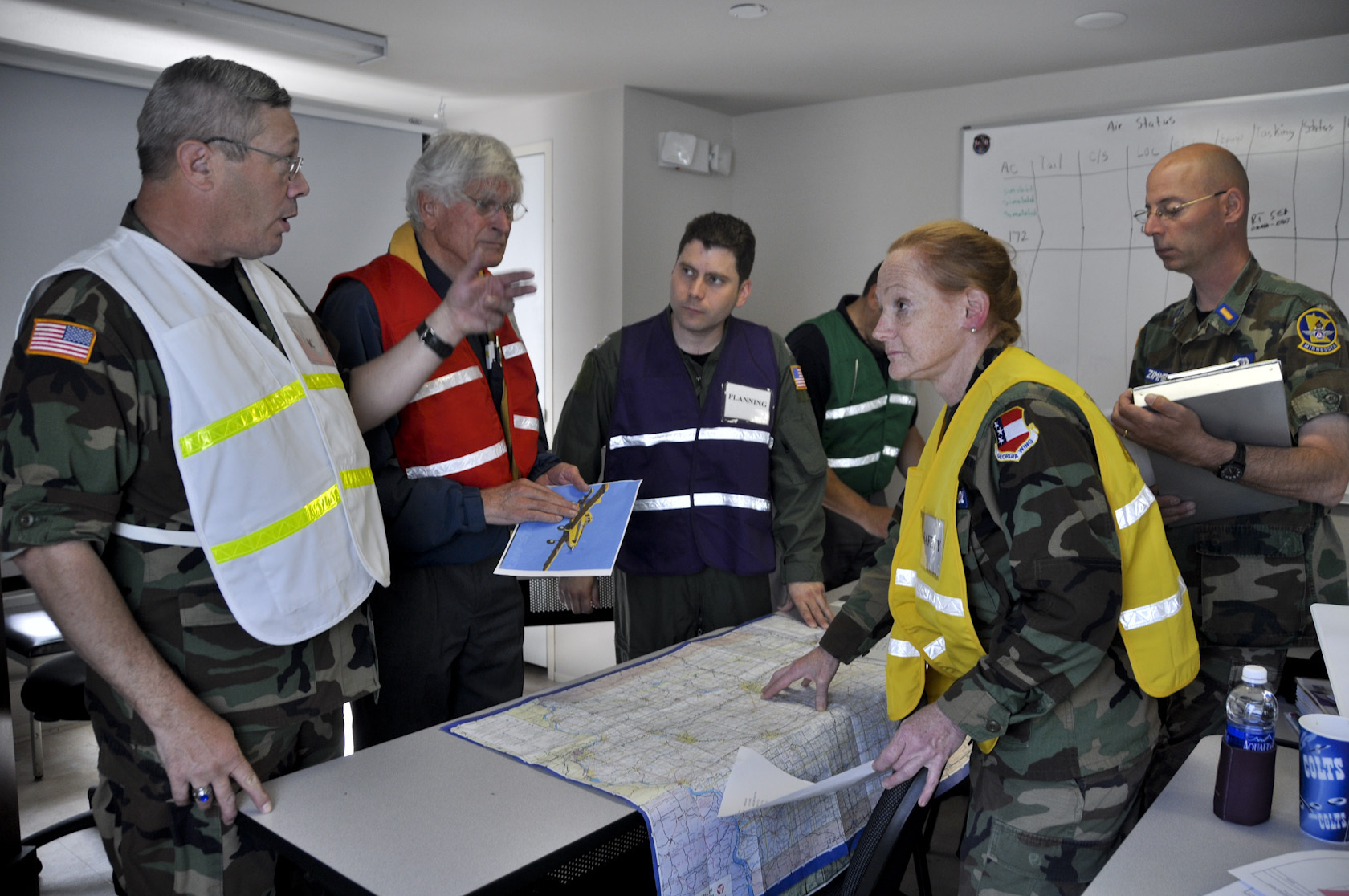
Conduct Regular Simulations (Red Teaming): Run incident drills that simulate AI-specific failures, such as a “data poisoning” event or an unexpected shift in input distribution. Test the transition from autonomous to manual operation.
Examples and Case Studies
Consider a regional power utility that uses an AI model to balance load distribution based on historical usage and weather patterns. During a sudden, anomalous heatwave, the model interprets the spike as a sensor error rather than a genuine demand surge and throttles power to critical cooling infrastructure.
In a standardized response environment, the IRP would have identified this specific risk. The AI-IRP would include an automated alert triggered by the discrepancy between the model’s prediction and raw sensor readings. Before the throttling occurs, the system logs the error, freezes the AI’s output, alerts the grid operators, and automatically reverts the grid to a safe, pre-programmed “Max Capacity” baseline. Without a standardized plan, operators might waste valuable minutes debating the accuracy of the model, by which time physical equipment damage could have already occurred.
Common Mistakes
Confusing IT Security with AI Safety: Many organizations assume their cybersecurity plan covers AI. It does not. Standard security stops unauthorized access; AI safety stops authorized but incorrect model behavior.
Ignoring the “Slow Burn” Failure: Organizations often focus on catastrophic sudden outages, but AI failures often manifest as subtle, gradual degradation of service (drift) that compounds over time.
Lack of Version Control: Failing to maintain a “roll-back” version of the model. If a model starts behaving erratically, the standard response should be an instant roll-back to the last known stable version.
Over-Reliance on the AI’s Self-Diagnostics: Never trust the model to report its own failure. The monitoring mechanism must be external and independent of the AI model being monitored.
Advanced Tips
For organizations looking to move beyond basic compliance, consider implementing Automated Circuit Breakers. Similar to high-frequency trading platforms, these are hard-coded rules that prevent the AI from making any decision that exceeds a certain volatility or risk threshold, regardless of what the model predicts.
Furthermore, emphasize Provenance and Lineage. In the aftermath of an incident, your team should be able to trace a specific prediction back to the exact training dataset version and hyperparameters used. If you cannot explain the provenance of the model’s “thought process,” you cannot effectively patch the vulnerability. Integrating these lineage tools into your IRP significantly reduces the “Mean Time to Recover” (MTTR) because it eliminates the guesswork of why the model behaved the way it did.
Finally, encourage a culture of “Model Skepticism.” Ensure that operators receive training not just on how to use the AI tools, but on the specific cognitive biases and limitations of the models they oversee. Resilience is as much a human trait as it is a technical one.
Conclusion
AI-dependent critical infrastructure represents a massive leap in operational capability, but it fundamentally alters the risk landscape of modern society. We are no longer guarding against simple mechanical failure or external intrusion; we are now guarding against the unpredictability of complex, autonomous systems.
Standardized Incident Response Plans serve as the essential safety net for this new reality. By proactively identifying failure modes, establishing rigorous observability, and preparing human operators for the “break-glass” moment, organizations can foster true resilience. Do not wait for a systemic failure to discover the limitations of your current strategy. Standardize, simulate, and sustain your AI-IRP today to ensure that the infrastructure of tomorrow remains reliable, safe, and secure.




Leave a Reply