Chief AI Officers serve as the primary interface between the organization and external regulatory bodies.
— by
Steven Haynes
The Chief AI Officer as the Primary Interface for Regulatory Compliance
Introduction
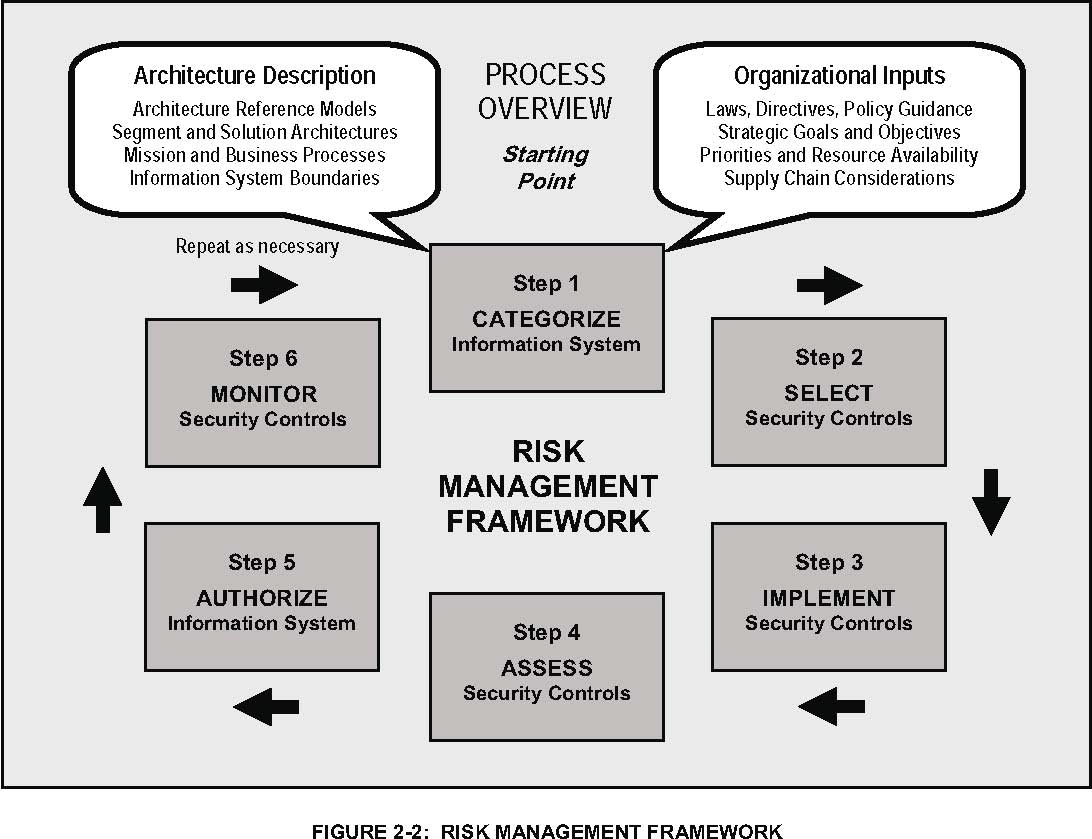
Artificial Intelligence is no longer just a technical undertaking; it is a profound organizational transformation. As governments worldwide shift from AI “guidance” to mandatory frameworks—such as the EU AI Act, NIST AI Risk Management Framework, and various sectoral regulations—the complexity of compliance has reached a breaking point. Organizations can no longer treat AI governance as a side project for IT departments.
This is where the Chief AI Officer (CAIO) steps in. The CAIO is emerging not just as a technology strategist, but as the primary interface between the organization and external regulatory bodies. In an era of heavy scrutiny, this executive role is the bridge that turns abstract legal requirements into operational reality. Understanding how to navigate this interface is now a prerequisite for organizational survival.
Key Concepts
To understand the role of the CAIO in a regulatory context, one must distinguish between traditional IT governance and AI-specific compliance. Unlike standard software, AI systems are non-deterministic, opaque, and prone to “drift.”
Regulatory Interfacing: This refers to the proactive communication and reporting process between an enterprise and authorities. It involves translating technical AI performance metrics—such as model bias, explainability scores, and data lineage—into language that regulators can evaluate.
The “System of Record” for AI: Regulators require an audit trail. The CAIO is responsible for building a centralized, immutable record of every AI system’s lifecycle—from data sourcing and training to deployment and continuous monitoring. This serves as the primary evidence provided to auditors.
Risk-Based Governance: Most incoming AI regulations are tiered based on risk (e.g., prohibited, high-risk, limited-risk). The CAIO must act as the arbiter who decides whether a specific deployment falls under a high-risk category, thereby determining the level of external oversight required.
Step-by-Step Guide
Map the Regulatory Landscape: Conduct an exhaustive audit of the jurisdictions in which your company operates. The CAIO must create a “Regulatory Matrix” that maps internal AI projects to specific laws like the EU AI Act, CCPA, or industry-specific financial regulations.
Establish Internal AI Governance Committees: Form a cross-functional task force consisting of legal, data science, and ethics leads. The CAIO acts as the chair, ensuring that all AI development complies with regulatory requirements from the “design” phase, rather than retrofitting compliance later.
Standardize Model Documentation: Implement “Model Cards” and “Datasheets for Datasets.” These are standardized documents that act as a technical passport for every AI system, detailing its intended use, limitations, performance benchmarks, and potential biases.
Formalize the Reporting Pipeline: Create a direct channel for disclosing “material incidents.” If an AI system fails or causes harm, the CAIO must have a pre-approved protocol for communicating with regulators. Transparency is usually rewarded with leniency; concealment is penalized.
Continuous Compliance Audits: Move beyond point-in-time compliance. The CAIO must integrate automated “compliance-as-code” tools that track model performance in real-time, sending alerts if a model’s output drifts into non-compliant territory.
Examples and Case Studies
Consider a large financial services organization deploying generative AI for loan underwriting. A regulatory body may demand an explanation for why a specific loan was denied. If the system is a “black-box” model, the firm is at risk of massive fines.
“The CAIO in this scenario acts as the translator. By enforcing the use of XAI (Explainable AI) libraries and maintaining an audit log of training data, the CAIO provides the regulator with a report that isolates the features—such as credit history vs. regional data—that drove the decision. This interaction turns a potential regulatory clash into a demonstration of robust governance.”
In another instance, a healthcare firm using AI to diagnose patient conditions must adhere to strict data privacy standards (like HIPAA) and clinical validation requirements. Here, the CAIO interfaces with health regulators by demonstrating that the AI’s training dataset was ethically sourced and that the system undergoes periodic “clinical safety” checks, effectively shifting the regulatory burden from an “accusation of negligence” to a “proof of excellence.”
Common Mistakes
Delegating Compliance to Legal Counsel Alone: Lawyers often lack the technical depth to understand why an AI model makes a decision. Without the CAIO, the legal department may approve documents that are technically inaccurate, leading to “compliance fiction.”
Ignoring Data Lineage: Many organizations focus on the AI model but neglect the training data. If a regulator asks where the training data originated, and the organization cannot provide a transparent lineage, they are automatically in breach of most modern AI frameworks.
Treating Audits as One-Off Events: AI is dynamic. A model that is compliant today may become non-compliant tomorrow due to feedback loops. The mistake is viewing compliance as a hurdle to jump, rather than an ongoing maintenance process.
Lack of Incident Response Planning: Companies often have cyber-incident plans but fail to account for “AI-incident” plans. A public, harmful hallucination from a chatbot is a regulatory event that requires immediate, expert intervention.
Advanced Tips
To truly excel in this interface role, the CAIO must move from reactive compliance to “Compliance by Design.”
Leverage Automated Documentation: Don’t rely on manual spreadsheets. Integrate your AI development environments (MLOps pipelines) with governance tools that automatically generate documentation whenever a model is updated. This ensures that the documentation is never out of sync with the actual code.
Engage in Regulatory Sandboxes: Many governments offer “regulatory sandboxes” where companies can test AI in a controlled, supervised environment. The CAIO should actively participate in these to influence how future regulations are shaped, rather than just waiting for mandates to be handed down.
Implement Red Teaming as Evidence: Use red teaming to stress-test your models against safety guidelines. When interacting with regulators, presenting the results of these red-teaming sessions—and showing the subsequent remediations—is one of the most effective ways to build trust and demonstrate high-level corporate responsibility.
Conclusion
The role of the Chief AI Officer is rapidly evolving from a technical leadership function into a mission-critical governance role. As the primary interface between the organization and regulatory bodies, the CAIO holds the keys to the company’s ability to innovate without being stifled by legal friction.
By establishing rigorous documentation standards, fostering cross-functional communication, and treating compliance as an ongoing lifecycle rather than a check-box exercise, the CAIO does more than just satisfy regulators. They build a moat of trust around the organization. In an increasingly skeptical world, the ability to clearly communicate the “why” and “how” of your AI systems is perhaps the most significant competitive advantage an enterprise can possess.







Leave a Reply