
Contents
1. Introduction: The hidden cost of ethical failures; why reactive crisis management is failing modern organizations.
2. Key Concepts: Defining “Shared Risk Assessment” and why ethical risks are distinct from financial or operational risks.
3. Step-by-Step Guide: How to build, implement, and maintain a collaborative ethical risk template.
4. Examples/Case Studies: Applying the framework to AI bias in hiring and supply chain labor practices.
5. Common Mistakes: The pitfalls of “checkbox compliance” and siloed assessment.
6. Advanced Tips: Integrating ethics into performance KPIs and leveraging cross-departmental “Red Teams.”
7. Conclusion: Moving from defensive compliance to ethical leadership.
***
The Architecture of Integrity: Using Shared Risk Assessment Templates to Prevent Ethical Failure
Introduction
In the modern corporate landscape, a single ethical lapse can erode decades of brand equity in an afternoon. While most organizations excel at quantifying financial, legal, and operational risks, ethical risks often remain the “blind spot” of the boardroom. Unlike a supply chain disruption or a market downturn, ethical failures are rarely abrupt; they are typically the result of incremental compromises that go unnoticed until they reach a breaking point.
Shared risk assessment templates provide a structural solution to this ambiguity. By creating a collaborative framework where stakeholders from HR, legal, product, and leadership must pressure-test decisions against a unified ethical standard, organizations can move from reactive damage control to proactive prevention. This article explores how to design, implement, and leverage these templates to safeguard your organization’s reputation and bottom line.
Key Concepts
At its core, a Shared Risk Assessment (SRA) is a diagnostic tool designed to evaluate the moral implications of business decisions before they are executed. Unlike traditional risk registers that focus on the “if it breaks” scenario, an SRA focuses on the “what if it’s wrong” scenario.
Ethical risk is defined as the potential for an organization’s actions, products, or policies to inflict harm—whether that harm is physical, systemic, or reputational—even if those actions are technically compliant with the law. The “shared” aspect is critical; ethical failures often occur in silos where one department (e.g., Marketing) does not understand the long-term impact of their strategy on another (e.g., Data Privacy). An SRA forces these disparate groups to speak the same language, transforming ethics from a vague organizational value into a measurable business metric.
Step-by-Step Guide
- Establish a Cross-Functional Task Force: You cannot assess ethical risk in a vacuum. Assemble a team consisting of representatives from Legal, Ethics/Compliance, Product Development, Human Resources, and Customer Success. This ensures that the risk is viewed through both a macro-strategic lens and a micro-operational one.
- Define the Ethical Thresholds: Before a template can be filled out, the organization must define its “red lines.” Create a document outlining non-negotiable ethical standards regarding data transparency, fair labor, environmental impact, and inclusivity. This serves as the benchmark against which all projects are tested.
- Create the Template Structure: Design a template that asks specific, non-binary questions. Instead of asking, “Is this risky?”, use prompts like: “Who is the most vulnerable party affected by this decision?”, “Could this initiative be perceived as manipulative, even if it is legal?”, and “What is the worst-case headline for this project in three years?”
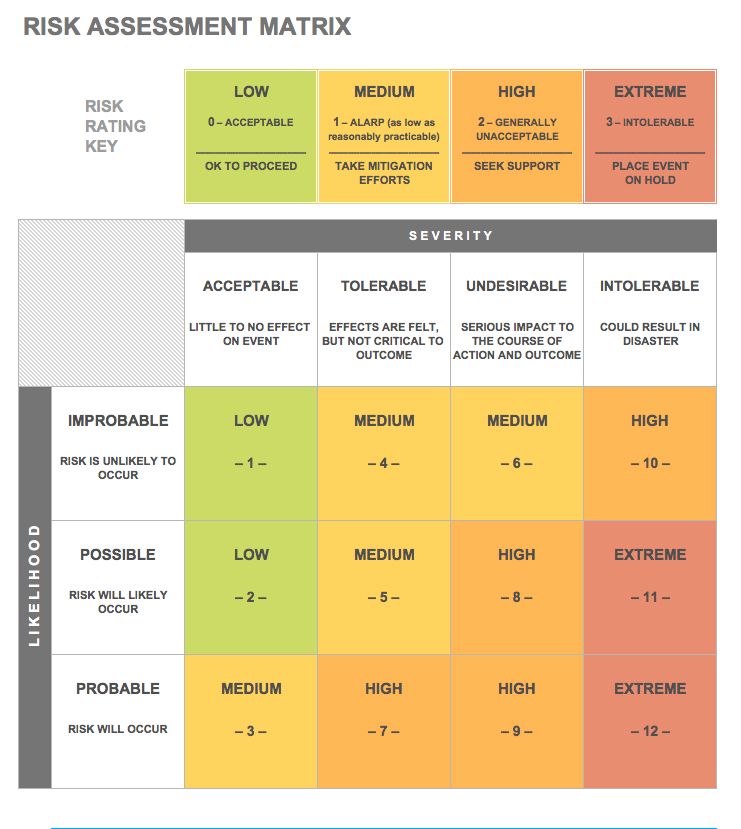
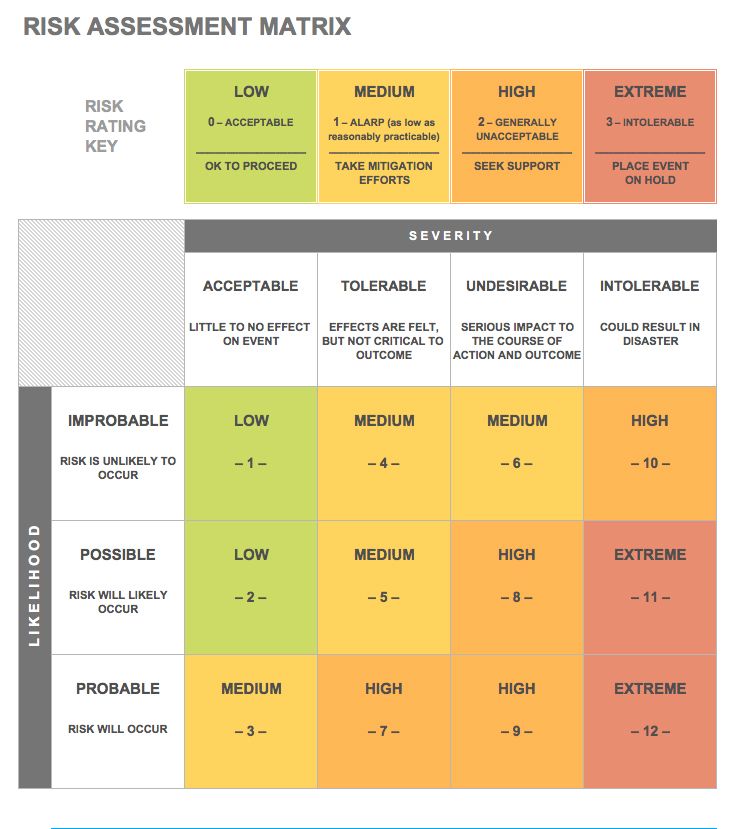
- The Iterative Scoring System: Assign a risk score to every project based on the input of all stakeholders. A project with a high “Ethical Risk Score” must be sent back for revision or brought to executive leadership for a formal waiver or modification.
- Documenting the Paper Trail: The template must function as a living record. By logging the consensus and the reasoning behind each assessment, the organization creates a defense of its due diligence should an external auditor or regulator ever question the ethical integrity of a decision.
Examples or Case Studies
Consider a tech firm developing a new AI-driven hiring platform. Without an SRA, the engineering team might focus solely on efficiency—ensuring the algorithm parses resumes quickly. If the team had used a shared risk assessment template, they would have been forced to engage the HR and Ethics leads during the design phase. These departments would have flagged the risk of “algorithmic bias,” where the AI favors candidates from specific universities or zip codes. By identifying this risk early, the firm could have adjusted the training data before the product launch, avoiding a PR scandal and potential litigation.
In another instance, a retail company considering a shift to a new overseas manufacturer might use an SRA to map out the entire supply chain. While the legal department may only require a basic contract, the SRA template would require the operations team to report on local labor laws, safety conditions, and living wages. If the SRA flags a “high risk” rating for child labor in that region, the company can proactively invest in third-party auditing before engaging the supplier, rather than discovering a violation after a news exposé.
Common Mistakes
- The “Checkbox” Mentality: The most common failure is treating the SRA as a bureaucratic hurdle rather than a genuine analytical exercise. When employees fill out the template just to “get it done,” they provide superficial answers that mask true risks.
- Siloed Responsibility: Delegating the SRA entirely to the Legal or Compliance department undermines the purpose. If the people building the product or strategy aren’t the ones feeling the weight of the assessment, the process loses its preventative power.
- Lack of Executive Buy-in: If leadership does not empower the SRA team to stop a project, the template becomes a performative act. True risk management requires the authority to pause or pivot high-risk initiatives.
- Static Templates: Ethical landscapes change rapidly. A template designed three years ago to measure data privacy is insufficient for today’s challenges involving generative AI. Templates must be updated at least annually.
Advanced Tips
To take your ethical risk management to the next level, integrate Red Teaming. In this exercise, assign a group of employees the specific role of “Devil’s Advocate.” Their sole job during the SRA review is to find reasons why the project might fail ethically. This gamification of risk often unearths subtle, systemic issues that standard templates might miss.
Additionally, tie the results of these assessments to department KPIs. If a department consistently delivers projects that require significant ethical mitigation, that is a signal of a deeper cultural issue. By making ethical foresight a metric of success, you incentivize managers to build integrity into their projects from the ground up, rather than treating it as a burdensome afterthought.
True ethical leadership is not about avoiding all risk; it is about having the structure to identify and navigate risks before they compromise the core values of the organization.
Conclusion
Shared risk assessment templates are more than just internal forms; they are the architectural blueprints of an ethical company. By forcing cross-departmental dialogue, demanding rigorous documentation, and establishing clear thresholds for behavior, these tools prevent the slow creep of unethical decision-making. In an era where public trust is the most fragile commodity in business, proactive ethical management is no longer a “nice-to-have” add-on. It is a fundamental requirement for long-term viability. Start by implementing a simple, collaborative template today, and begin building a culture where ethical failure is not just prevented, but actively anticipated and avoided.

Leave a Reply