Decentralized religious networks benefit from blockchain-based authentication to prevent the spread of theological disinformation.
— by
Steven Haynes
Contents
1. Introduction: The digital era’s challenge to religious integrity and the rise of decentralized faith communities.
2. Key Concepts: Defining theological disinformation, the mechanism of blockchain-based identity (SSI), and the concept of “Digital Provenance.”
3. Step-by-Step Guide: Implementation roadmap for religious organizations to adopt cryptographic authentication.
4. Examples/Case Studies: Current pilots in digital canonization and verified pulpit-sharing.
5. Common Mistakes: Over-centralization, ignoring user accessibility, and confusing ledger security with content moderation.
6. Advanced Tips: Zero-knowledge proofs (ZKPs) for confidential spiritual counseling and interoperability between denominations.
7. Conclusion: The future of “Trustless” religious infrastructure.
***
Securing the Digital Pulpit: Using Blockchain to Counter Theological Disinformation
Introduction
For centuries, the integrity of religious teaching relied on physical proximity and hierarchical gatekeeping. Today, the internet has democratized access to theology, allowing for a vibrant exchange of ideas. However, this same openness has enabled the rapid proliferation of theological disinformation. Whether through AI-generated sermons, malicious impersonation of clergy, or the distortion of sacred texts, digital misinformation now threatens to fracture faith communities and erode trust.
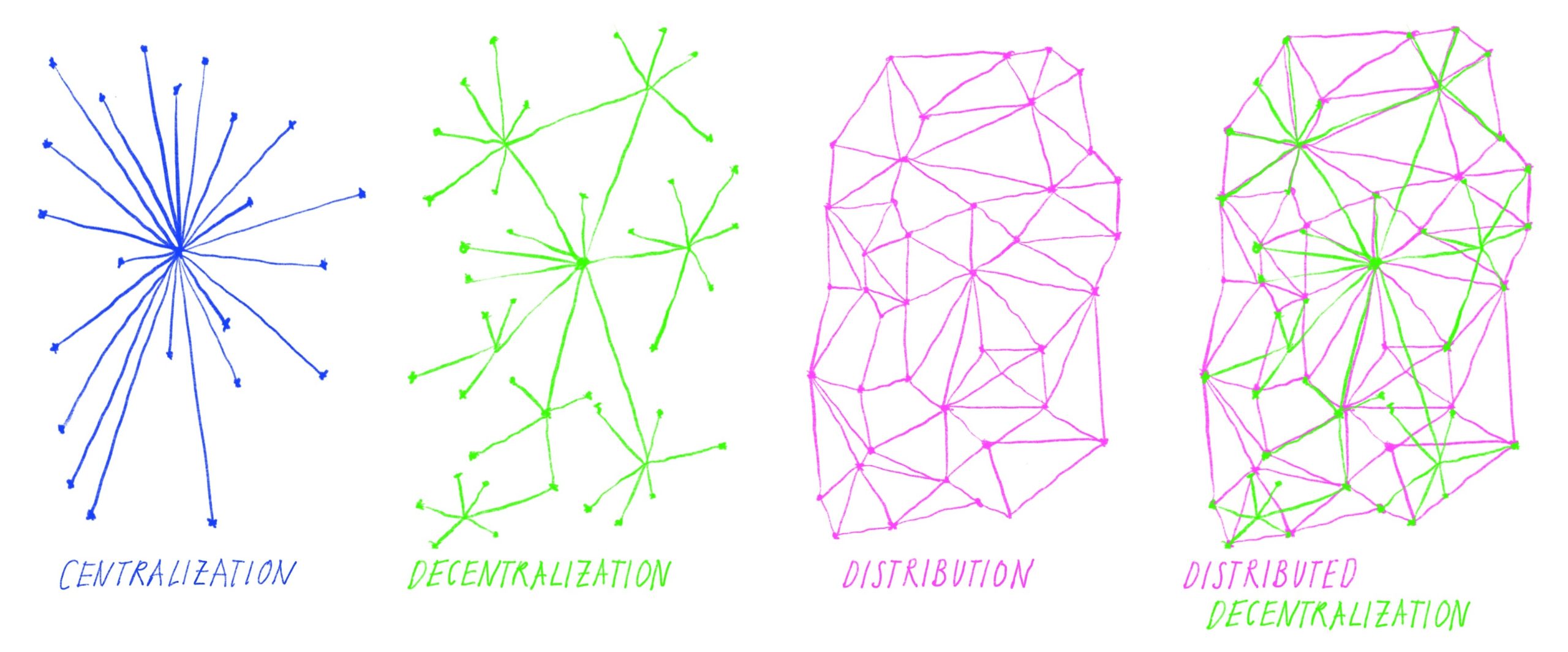
The solution does not lie in more centralized, authoritarian control, but in the power of decentralized technology. By leveraging blockchain-based authentication, religious networks can provide a “digital seal of authenticity.” This ensures that when a believer reads a text, listens to a homily, or views a pastoral instruction, they can verify its provenance without relying on a centralized intermediary. This article explores how decentralized identity frameworks can safeguard the integrity of religious discourse.
Key Concepts
To understand the application of blockchain in this context, we must distinguish between the content of a message and its provenance. Blockchain does not prevent someone from lying; it prevents someone from lying in your name.
Cryptographic Identity and SSI
Self-Sovereign Identity (SSI) allows clergy or religious institutions to hold digital “keys.” When a leader broadcasts a teaching, they sign it with a private key. This creates a cryptographic proof that the message originated from that specific, verified source. Because this happens on a decentralized ledger, the proof is immutable—no hacker or bad actor can alter the metadata to make it appear as if the message came from someone else.
Digital Provenance
Digital provenance is the “chain of custody” for information. In a religious context, this allows a believer to trace a specific quote or theological position back to its authoritative source—be it a council, a bishop, or a recognized scriptural scholar. If a document lacks this cryptographic signature, users are alerted that it is unverified, significantly lowering the spread of “deepfake” sermons or distorted scriptures.
Transitioning a religious network to a blockchain-backed infrastructure requires a structured approach that prioritizes security and accessibility for non-technical members.
Establish a Decentralized PKI (Public Key Infrastructure): The religious body must decide on a framework for issuing decentralized identifiers (DIDs). These DIDs act as the “digital robes” of the clergy, ensuring that the identity is portable and not owned by a single tech platform.
Issue Verifiable Credentials: The institution issues digital credentials to authorized leaders. These credentials act like a digital signature that can be attached to official publications, videos, and audio files.
Integrate Verification UI: Build a user-facing interface—a browser extension or an app—that performs a “check” on the content being consumed. If a user visits a website claiming to host a sermon from their denomination, the extension verifies the signature against the blockchain ledger.
Educate the Flock: Technology is only as effective as its adoption. Host workshops that explain the importance of verifying digital signatures. Frame this as “digital discernment,” framing the technical verification as a modern version of historical scriptural vetting.
Maintain a Consensus Governance Model: Governance of the “root identity” should be distributed. A multi-signature (multi-sig) setup is ideal, where critical credentials require approval from multiple trusted members of a council to prevent a single compromised account from wreaking havoc.
Examples and Case Studies
Several early adopters are already exploring how blockchain can preserve theological integrity. For instance, academic institutions and religious archives are beginning to store “canonical versions” of liturgical texts on public blockchains. By hashing these texts, they ensure that if a PDF circulating online has been surreptitiously edited, the hash will not match the immutable record on the blockchain.
In another scenario, large denominations with thousands of local branches use blockchain to distribute pastoral announcements. Previously, a disgruntled former staff member might use a defunct church social media account to issue false directives. With blockchain-based authentication, the congregation knows that only messages signed by the current, verified private key are authentic. Any message—no matter how official it looks—that lacks this signature is immediately flagged by the community as unauthorized.
Common Mistakes to Avoid
Confusing Security with Truth: Blockchain validates who sent the message, not whether the message is theologically correct. Do not market these tools as an “AI truth machine.” It is a tool for identifying origin, not a tool for arbitrating doctrine.
Over-Complicating the User Interface: If it takes twenty minutes to verify a video, nobody will do it. The authentication process must happen in the background, showing a simple “Verified Source” green checkmark.
Ignoring Legacy Systems: Do not abandon existing channels of communication. Instead, wrap them in a verification layer. Use existing websites, social media, and email, but use blockchain as a metadata layer that validates the content within those channels.
Centralizing the Ledger: If you use a private, centralized database disguised as a blockchain, you create a single point of failure. If that central server is hacked, the “authentication” becomes a weapon for the attacker. Always utilize decentralized protocols to ensure the integrity of the ledger.
Advanced Tips: Scaling Trust
To go beyond basic authentication, organizations should consider the following advanced strategies:
Zero-Knowledge Proofs (ZKPs) for Confidentiality
Sometimes, verification needs to happen without revealing private information. For example, a pastoral counselor may need to prove they are ordained by a specific body to a member seeking help, without that member necessarily knowing the counselor’s legal name or home address. ZKPs allow a user to prove a statement (e.g., “I am an ordained minister”) is true without revealing any underlying data.
Inter-Denominational Interoperability
The goal should not be to create “walled gardens.” By using open standards like W3C Verifiable Credentials, different religious groups can establish cross-institutional trust. If a scholar from one tradition contributes a guest post to another, their credentials—if they adhere to the same decentralized standards—can be automatically verified by the host organization’s systems.
Conclusion
The digital age has presented religious communities with a crisis of authority. In an environment where everyone can claim to speak for a tradition, the ability to discern the authentic from the fraudulent is paramount. Decentralized religious networks, armed with blockchain-based authentication, can reclaim the integrity of their message.
By moving from a model of “trust the platform” to “verify the signature,” religious institutions can create a digital ecosystem that is both open and secure. The technology is no longer the barrier; the challenge now lies in adoption, governance, and education. As we look toward a future defined by increasingly sophisticated synthetic media, the implementation of cryptographic provenance will be the defining factor in whether a religious community survives as a coherent, trusted body or dissolves into the chaos of digital disinformation.
The core mandate of any spiritual community is the preservation and propagation of truth. In the 21st century, that mandate requires the adoption of tools as sophisticated as the threats we face. Blockchain is not merely a financial technology; it is a technology of record-keeping that can finally bring the concept of ‘the witness’ into the digital age.



Leave a Reply