
Mapping the Esoteric: Geospatial Analysis of Symbol Diffusion and Trade Networks
Introduction
For centuries, esoteric symbols—from the intricate geometry of alchemical sigils to the precise alignment of megalithic stones—have served as silent markers of human belief. Traditionally, historians have analyzed these symbols through text and iconography. However, these methods often overlook the physical reality of how ideas moved across ancient landscapes. By utilizing geospatial analysis (GIS), we can bridge the gap between abstract ideology and material movement, mapping how secret knowledge diffused along the veins of ancient trade routes.
This approach transforms archaeology into a data-driven science. By correlating ritual site locations with trade corridors, we can identify “knowledge hubs,” predict the movement of cultural paradigms, and visualize the economic cost of spirituality. Whether you are a historian, a digital archaeologist, or a cultural analyst, understanding the spatial distribution of symbols provides a new lens to view the architecture of human exchange.
Key Concepts
Geospatial Analysis (GIS): The systematic collection, display, and analysis of data that has geographic reference. In this context, it involves layering site coordinates over topographic and trade-route models.
Least-Cost Path Analysis (LCPA): A computational method used to determine the most energy-efficient route between two points. By calculating terrain difficulty, we can simulate ancient trade routes rather than relying on assumed paths.
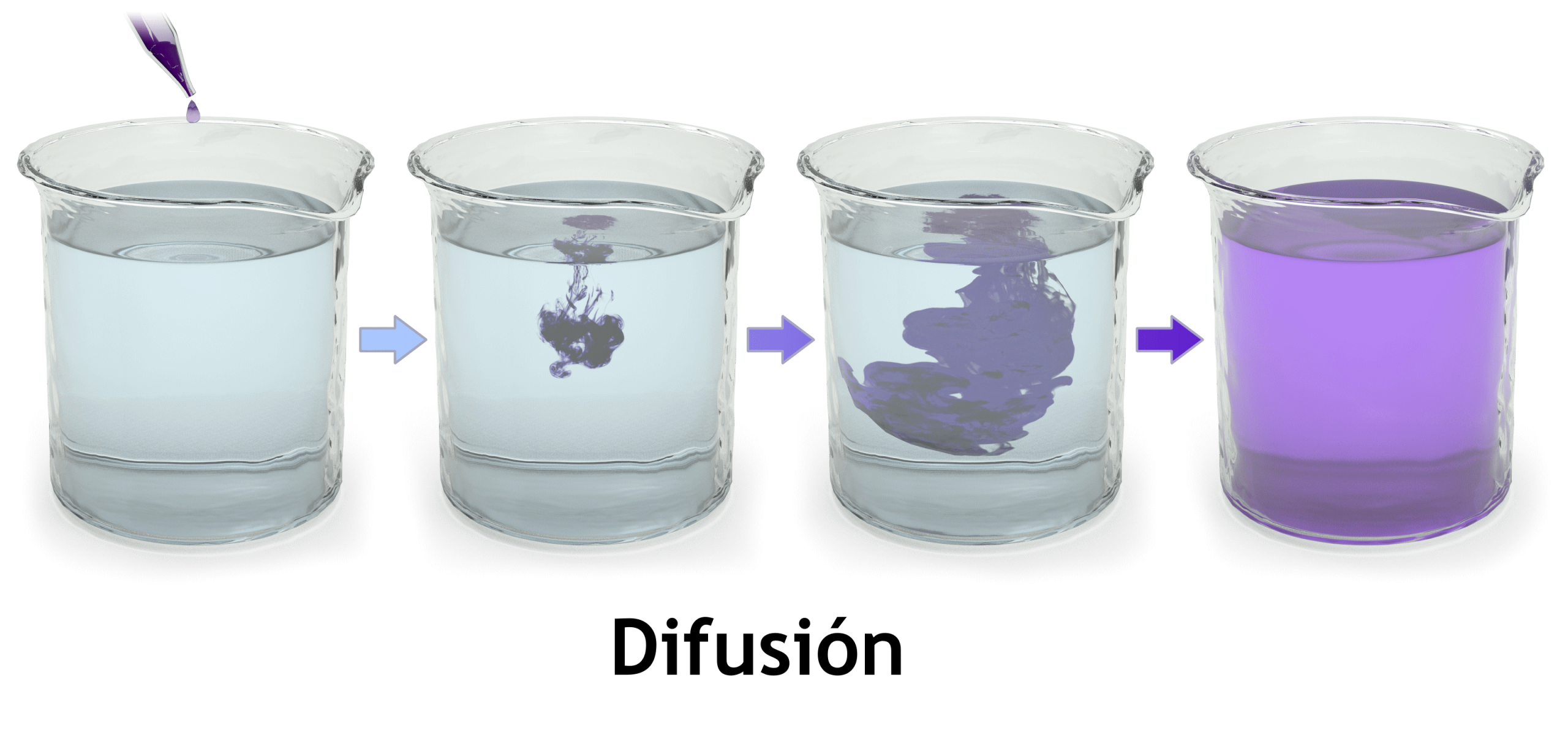
Cultural Diffusion: The spread of beliefs, symbols, and technologies from one society to another. Esoteric symbols often moved not through mass migration, but through “elite networks” of traveling craftsmen, merchants, and mystics.
Spatial Correlation: A statistical technique used to determine if the placement of ritual sites is statistically associated with trade infrastructure (such as mountain passes, rivers, or oasis routes) rather than random placement.
Step-by-Step Guide: Mapping Esoteric Diffusion
- Data Collection and Digitization: Begin by plotting the precise GPS coordinates of known ritual sites (e.g., sites containing specific symbols like the Flower of Life, planetary glyphs, or architectural orientations). Ensure your data set includes a “temporal tag” to account for the era of each site.
- Reconstruct Paleolandscapes: Use GIS software to recreate the environmental conditions of the era. Incorporate historical hydrological data and forest cover to understand which paths were accessible 1,000 or 2,000 years ago.
- Perform Least-Cost Path Analysis (LCPA): Apply LCPA to generate models of likely trade routes connecting urban centers of the time. Do these paths intersect or bypass the ritual sites in your dataset?
- Buffer Zone Analysis: Create “buffer zones” around trade routes (e.g., 5km and 10km radii). Use spatial queries to calculate the density of esoteric symbols within these zones compared to remote, non-traversed areas.
- Statistical Testing: Run a “Nearest Neighbor” analysis to determine if the symbols are clustered along trade corridors or if their distribution is truly random. If clustering is high, you have identified a strong correlation between trade activity and esoteric knowledge transmission.
Examples and Case Studies
The Silk Road Sigils: Researchers have applied geospatial mapping to the spread of Manichaean and Buddhist symbols along the Silk Road. By overlaying the sites where specific religious iconography appears against the reconstructed trade routes of the Kushan Empire, GIS revealed that esoteric knowledge was not just a side effect of trade, but a commodity itself, exchanged by merchant guilds who doubled as secret keepers.
The Megalithic Corridors of Western Europe: In the Atlantic facade of Europe, the distribution of symbols carved into standing stones correlates remarkably well with coastal maritime routes. Geospatial analysis shows that these carvings served as both navigational beacons and cultural markers, indicating the “territory of the initiated” along major seafaring paths.
The geography of belief is rarely accidental. Ritual sites positioned at the intersections of trade routes often served as ‘information exchanges’ where esoteric knowledge was codified and exported alongside physical goods.
Common Mistakes
- Ignoring Topographic Change: Assuming that current geography reflects the geography of the past. If you don’t account for sea-level changes or river shifts, your trade route simulations will be fundamentally flawed.
- Confirmation Bias: Forgetting to account for “Null Results.” It is just as important to map where symbols are absent as it is to map where they are present.
- Neglecting Temporal Depth: Mapping sites from different eras onto a single map. Symbols evolved; plotting a 5th-century glyph alongside a 12th-century sigil can create a false narrative of simultaneous diffusion.
- Over-relying on Modern Assumptions: Assuming ancient people moved only on the “best” paths. Religious travel often sought difficult terrain for pilgrimage, which may deviate from standard commercial trade routes.
Advanced Tips
To deepen your analysis, integrate Network Theory. Instead of looking at maps as simple grids, view them as networks where ritual sites act as “nodes” and trade routes as “edges.” Use centrality measures to identify “high-traffic” sites that likely acted as hubs for the dissemination of esoteric lore.
Furthermore, incorporate Visibility Analysis (Viewshed Analysis). If a ritual site is located on a trade route, how much of that route can the site see? Often, esoteric sites were positioned to watch over trade paths, acting as protective landmarks. If the viewshed covers a specific segment of the trade route, it suggests that the site’s location was chosen specifically for its vantage point, not just proximity to a road.
Finally, leverage Satellite Remote Sensing to identify unrecorded sites. By using multi-spectral imagery to detect variations in soil moisture or vegetation growth, you may discover hidden ritual structures that fill the gaps in your existing map, providing a more robust dataset for your analysis.
Conclusion
Geospatial analysis allows us to peel back the layers of history, transforming fragmented ritual sites into a coherent map of human interaction. When we view esoteric symbols through the lens of trade and movement, we see that the spread of “secret” knowledge was rarely a private affair. It was, rather, a calculated component of cultural and economic networks.
By mapping these intersections, you gain the ability to predict cultural exchange, uncover hidden historical paths, and understand the deep-rooted relationship between the landscapes we traverse and the symbols we hold sacred. As data collection methods improve, the geography of the esoteric will continue to reveal the complex, interconnected nature of our ancestors’ inner and outer worlds.



Leave a Reply