Conclusion: Why owning your key is the ultimate exercise of digital sovereignty.
The Digital Sigil: Reclaiming Agency Through Cryptographic Identity
Introduction
For centuries, the sigil served as a potent symbol—a shorthand for intent, authority, and identity. Whether inscribed on a signet ring to seal a wax letter or carved into a talisman, the sigil was a physical manifestation of a person’s will. In the digital age, our identity has been hollowed out, reduced to rows in centralized databases owned by tech giants. We are currently experiencing a crisis of agency: we do not own our identities; we borrow them.
The solution lies in a return to the foundational roots of cryptography. Cryptographic keys are not merely technical strings of alphanumeric characters; they are the modern equivalent of the personal seal. By treating your private key as a digital sigil—an immutable expression of your identity and intent—you can move from being a user of systems to an architect of your own digital sovereignty. This article explores how we can leverage Public Key Infrastructure (PKI) to reclaim personal power in an era of surveillance capitalism.
Key Concepts
To understand the cryptographic key as a sigil, we must move beyond the technical jargon and focus on the concept of Digital Sovereignty. At its core, a cryptographic key pair consists of a public key (your address or identifier) and a private key (your seal).
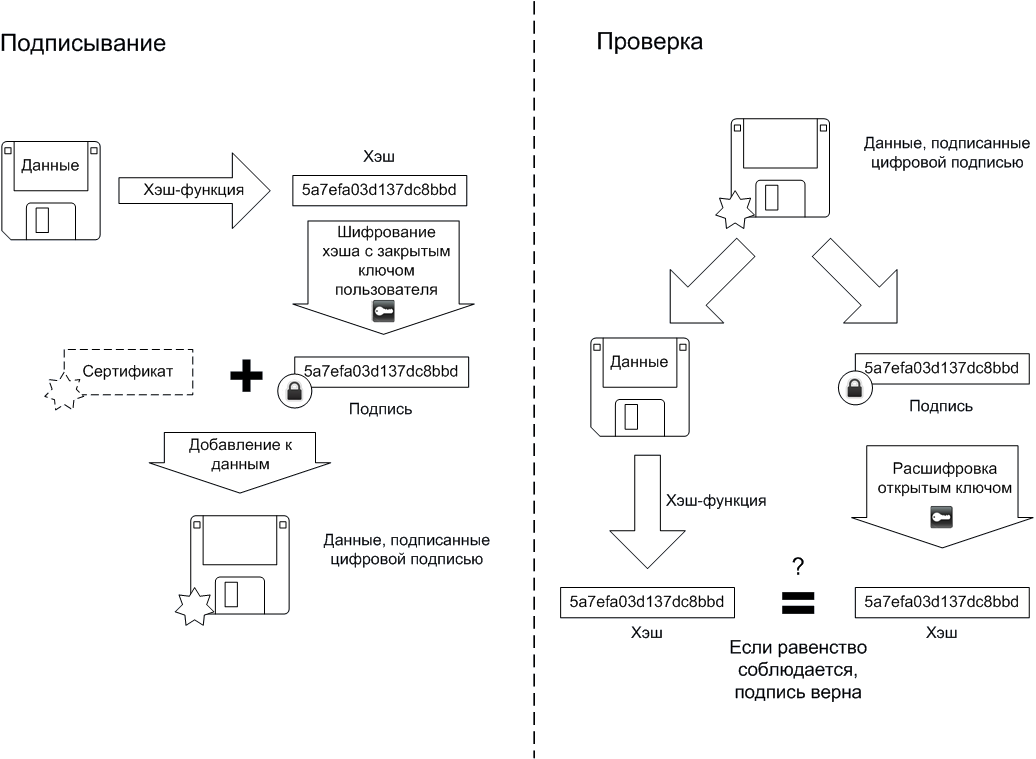
A sigil, in its historical context, works because it is unique to the user and difficult to forge. Similarly, an asymmetric key pair provides non-repudiation. If a message is signed with your private key, no third party can claim you didn’t send it, and no third party can modify it without breaking the signature. This is the cryptographic manifestation of “your word is your bond.”
The private key is the only thing that proves your existence in a decentralized network. It is the modern artifact of the self.
By shifting our perspective, we move away from passwords—which are vulnerable, shared, and easily stolen—toward Key-Based Identity. In this model, you are not logging into a website; you are signing a transaction that confirms you are you. This is the difference between asking for permission and exercising authority.
Step-by-Step Guide: Establishing Your Digital Sigil
To begin treating your cryptographic keys as your primary identity, follow this progression to secure and manage your digital presence.
Generate an Isolated Entropy Source: Do not use keys generated by web browsers or cloud services. Use offline-first tools like a dedicated hardware wallet (e.g., Ledger or Trezor) or an air-gapped system to generate your master key. This ensures your “sigil” is truly yours and has never touched a networked environment.
Adopt Decentralized Identifiers (DIDs): Register a DID (W3C standard). Unlike a domain name or social media handle, a DID is not owned by a company. It is a URI that points to a document controlled by your cryptographic key. When you update your identity, you simply update the document associated with your key.
Implement Key Rotation: A static sigil is a target. Establish a primary “master” key that stays offline at all times and use “signing” keys for daily interactions. If a signing key is compromised, your identity remains secure because it can be revoked by your master key.
Establish a Recovery Vector: The danger of a digital sigil is that if you lose the key, you lose your identity. Use a threshold scheme (Shamir’s Secret Sharing) to split your recovery key across several physical locations or trusted nodes.
Real-World Applications
The shift toward using keys as sigils is already visible in several emerging technological sectors:
Self-Sovereign Identity (SSI): Projects like Hyperledger Aries and ION allow individuals to hold their own credentials—such as digital passports or professional certifications—in a wallet. You decide when to present these credentials, and the receiver verifies them against the blockchain without ever touching a central database.
Cryptographic Content Provenance: Journalists and artists are using private keys to “sign” digital media. By appending a signature to an image or document, the creator ensures that the file remains authentic as it travels across the internet, serving as a permanent digital fingerprint.
Decentralized Social Protocols: Platforms like Nostr use public/private key pairs as the base layer for social interaction. You don’t have an “account” on a server; your key is your account. If one social interface censors you, you simply move your key to another platform, and your entire history and follower base travel with you.
Common Mistakes
Even those with technical savvy often fall into traps that compromise their cryptographic identity.
Dependency on Centralized Custodians: Using a browser-based wallet (like a standard MetaMask install without hardware support) means the software provider has access to your keys. Never mistake a custodial service for true ownership.
Over-Exposure of Public Keys: Treat your public key like an address. While it is public, using the same key for every interaction creates a digital trail that can be used for profiling. Use “stealth addresses” or unique key pairs for different domains of your life to preserve privacy.
Failure to Plan for Succession: A sigil that vanishes when you do is a tragedy. Ensure that your cryptographic assets have a clear inheritance path. If your private keys are buried in an encrypted drive with no recovery mechanism for your beneficiaries, your identity effectively dies with you.
Advanced Tips
To take your digital identity to the next level, integrate your cryptographic keys into your physical security philosophy.
Consider the use of Multi-Signature (Multi-Sig) logic. Do not rely on one key. For your most critical digital assets or identity portals, require two out of three keys to authorize a change. This mirrors the ancient practice of requiring multiple witnesses to seal a significant document. By distributing the “sigil” across different hardware devices, you mitigate the risk of physical loss or theft.
Furthermore, explore Cryptographic Provenance. When you write a blog post or a professional opinion, sign the text file with your PGP key. Upload the signature alongside the content. This transforms your output from a mere statement into an immutable, verifiable act of authorship. It is the modern equivalent of signing your work with a brush or a seal, confirming that this—and only this—is your genuine expression.
Conclusion
The cryptographic key is the most powerful tool for individual agency we have ever possessed. By moving away from the convenience of centralized “Log in with Google” buttons and toward the deliberate management of our own private keys, we transition from passive consumers to active participants in the digital ecosystem.
Your keys are your identity. They are your sigils—your mathematical promise to the world. Treat them with the gravity they deserve, keep them secure, and use them to define your space in the digital world. Sovereignty is not a gift granted by platforms; it is a discipline practiced by the individual. Start by reclaiming the signature of your own life.