
Contents
1. Introduction: Bridging the gap between orbital manufacturing and cognitive science—why human-in-the-loop systems require risk-sensitive control.
2. Key Concepts: Defining Risk-Sensitive Control (RSC) and Cognitive Load Theory in the context of microgravity.
3. Step-by-Step Guide: Implementing a risk-sensitive framework for orbital manufacturing tasks.
4. Case Studies: Applying Bayesian cognitive modeling to robotic arm teleoperation.
5. Common Mistakes: Over-automation and the “vigilance decrement” phenomenon.
6. Advanced Tips: Integrating predictive physiological monitoring into control loops.
7. Conclusion: The future of human-machine symbiosis in space.
***
Risk-Sensitive On-Orbit Manufacturing: A Cognitive Science Perspective
Introduction
As we transition from short-term orbital missions to permanent manufacturing hubs in low-Earth orbit (LEO), the complexity of on-orbit production increases exponentially. Whether 3D printing high-tolerance components or assembling modular structures, the synergy between human oversight and automated systems is critical. However, space is a high-stakes, high-latency environment where cognitive fatigue and situational awareness degradation can lead to catastrophic mission failure.
This article explores the intersection of risk-sensitive control (RSC) policies and cognitive science. By designing manufacturing control systems that account for human cognitive limits, we can foster safer, more efficient production environments. It is not merely about optimizing machine throughput; it is about calibrating the machine’s behavior to the human operator’s fluctuating cognitive state.
Key Concepts
Risk-Sensitive Control (RSC) is a mathematical framework that prioritizes the avoidance of high-variance, high-loss outcomes over simple average-case efficiency. In orbital manufacturing, this means the system is programmed to favor stability and safety margins even if it results in slightly slower production cycles.
Cognitive Science in Space focuses on how microgravity, radiation, and extreme isolation affect human information processing. Key concepts include:
- Cognitive Load Theory: The human brain has a finite capacity for working memory. When orbital systems provide too much raw telemetry, the operator enters cognitive overload.
- Vigilance Decrement: The natural decline in human attention during long, monotonous monitoring tasks—a common reality in automated manufacturing.
- Human-Machine Symbiosis: The design of control interfaces where the machine acts as a cognitive extension, adjusting its level of autonomy based on the human’s perceived stress levels.
Step-by-Step Guide: Implementing a Risk-Sensitive Control Framework
To integrate cognitive science into on-orbit manufacturing, operators and engineers should follow a structured control policy implementation:
- Define the Risk Threshold: Establish a clear “cost-to-failure” metric. In an orbital factory, a failed print is not just a loss of materials; it is a waste of limited mission time and potential debris generation.
- Model Operator Cognitive States: Use non-invasive physiological sensors (e.g., eye-tracking, heart rate variability) to establish a baseline for the operator’s current cognitive load.
- Implement Dynamic Autonomy: Program the manufacturing system to automatically increase its self-correction capabilities when the operator’s cognitive load is high, and allow for more manual intervention when the operator is in a “flow” or low-load state.
- Latency-Aware Feedback Loops: Because space-to-ground or intra-station communication can introduce jitter, ensure the control interface provides “predictive haptics” or visual overlays that account for signal delay, preventing the operator from over-correcting during remote manufacturing tasks.
- Continuous Calibration: Use machine learning to refine the risk-sensitive policy based on historical performance data, ensuring the system learns which tasks consistently lead to human errors.
Examples and Case Studies
Case Study: Robotic Assembly in Microgravity
Consider the assembly of a large-scale solar array using robotic manipulators. When the human operator is in a state of low cognitive load, the system operates in “supervisory mode,” requiring manual confirmation for every torque adjustment. However, if the operator’s eye-tracking data indicates fatigue or distraction, the system shifts into “risk-sensitive autonomous mode.” In this state, the robot utilizes a pre-set, highly conservative trajectory that prioritizes structural integrity over speed, effectively “braking” the process if it detects an anomaly that the distracted human might miss.
Application: Bayesian Cognitive Modeling
Engineers have utilized Bayesian models to predict when an operator is likely to commit a motor error during complex orbital maneuvers. By feeding this model into the manufacturing control policy, the system can temporarily lock out manual overrides if the probability of human error exceeds a defined risk threshold, effectively forcing a “safety pause.”
Common Mistakes
- Over-Automation: Relying entirely on autonomous systems without providing the human with a meaningful way to intervene. This leads to “automation surprise,” where the operator doesn’t understand why the system is behaving in a certain way, causing panic.
- Ignoring Latency: Designing control interfaces that assume real-time responsiveness. In space, even millisecond delays can lead to “control loop instability,” where the human and machine fight each other for control.
- Static Risk Profiles: Treating every manufacturing task with the same risk weighting. Building a structural bracket requires different risk tolerances than printing a non-critical cable tie. Failure to differentiate leads to inefficient throughput.
Advanced Tips
To push the boundaries of orbital manufacturing, consider the following advanced integration strategies:
Predictive Physiological Monitoring: Beyond simple heart rate, monitor patterns in eye-blink frequency and pupil dilation to anticipate cognitive exhaustion before it manifests as a performance error. If the system detects a decline, it should proactively simplify the user interface (UI) to display only high-level status updates, reducing the cognitive burden.
Haptic Feedback Loops: Incorporate haptic (tactile) feedback into teleoperation consoles. By providing physical resistance when an operator is pushing a manufacturing tool toward an unsafe limit, the system utilizes the human’s proprioceptive system, which is faster than visual processing.
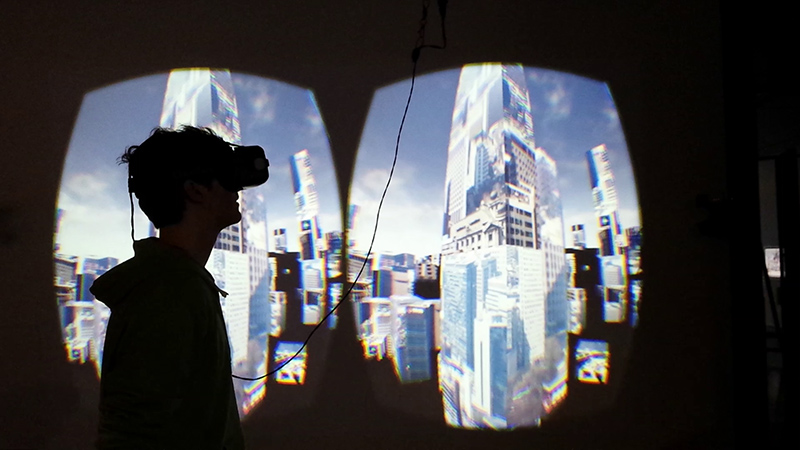
Human-in-the-Loop (HITL) Simulation: Before deploying new manufacturing policies, run them through high-fidelity VR simulations with human test subjects. This allows you to map out the “cognitive landscape” of the task and identify bottlenecks before they occur in orbit.
Conclusion
The successful scaling of on-orbit manufacturing depends less on the raw power of our robots and more on the sophistication of our control policies. By embedding risk-sensitive logic directly into the manufacturing architecture—logic that respects and compensates for human cognitive limitations—we can unlock a new era of space production.
The most advanced control system is not the one that operates without humans, but the one that empowers humans to operate with the machine as a singular, cohesive, and risk-aware entity.
As we continue to push into the cosmos, let us design for the human mind as carefully as we design for the vacuum of space. By prioritizing cognitive safety today, we ensure the structural integrity and mission success of our orbital future.

Leave a Reply