1. Introduction: Bridging the gap between neuro-engineering and control theory for high-stakes energy management.
2. Key Concepts: Defining risk-sensitive control, the closed-loop paradigm, and why these algorithms are the new standard for volatile energy grids.
3. Step-by-Step Guide: How to implement a risk-sensitive neurostimulation framework in energy dispatch.
4. Examples and Case Studies: Application in microgrid stabilization and renewable energy integration.
5. Common Mistakes: Overfitting, latency issues, and ignoring tail-risk.
6. Advanced Tips: Incorporating Bayesian uncertainty and adaptive gain scheduling.
7. Conclusion: The future of autonomous energy regulation.
***
Risk-Sensitive Closed-Loop Neurostimulation Algorithms for Modern Energy Systems
Introduction
The modern energy grid is no longer a static, predictable infrastructure. With the proliferation of decentralized renewable sources, battery storage, and smart-grid IoT devices, the grid has become a high-entropy environment. To manage this volatility, engineers are increasingly looking toward biomimetic control strategies. Specifically, risk-sensitive closed-loop neurostimulation algorithms—originally designed to optimize neural firing patterns in the brain—are proving to be a revolutionary framework for balancing energy supply and demand.
Why does this matter? Traditional control systems (like PID controllers) often struggle with the nonlinear, stochastic nature of modern energy spikes. By applying a neurostimulation-inspired approach, grid managers can treat energy nodes like neurons, applying “stimuli” (load adjustments or storage discharge) that are not just reactive, but risk-aware. This approach prioritizes stability in the face of extreme volatility rather than just optimizing for average performance.
Key Concepts
To understand how this translates to energy systems, we must break down three core pillars:
1. Closed-Loop Paradigm: Unlike open-loop systems that follow a set schedule, a closed-loop system uses real-time feedback to adjust its state continuously. In an energy context, this means the algorithm monitors grid frequency and voltage, adjusting inputs in milliseconds to prevent cascading failures.
2. Risk-Sensitivity: Standard algorithms often maximize for expected returns (e.g., minimizing average cost). Risk-sensitive algorithms, however, incorporate an “entropy-regularized” term. They are mathematically tuned to be particularly sensitive to “tail risks”—the rare, high-impact events that cause blackouts.
3. Neurostimulation Mapping: In neuroscience, this involves stimulating a neural population to stabilize activity. In energy, the “nodes” are power substations or battery arrays. The algorithm determines the optimal “stimulation” (power injection/absorption) to move the system back to a homeostatic state.
Step-by-Step Guide: Implementing a Risk-Sensitive Control Loop
Define the State Space: Identify the critical variables of your energy system, such as frequency, phase angle, and current load demand. These form the “neural” state of your network.
Model the Uncertainty: Instead of assuming a normal distribution of power surges, use heavy-tailed distributions to account for extreme, unpredictable events. This is where the “risk-sensitive” aspect is programmed.
Define the Reward Function: Create a function that penalizes not just high costs, but high variance and proximity to safety limits. The algorithm will learn to favor paths that maintain a high “safety buffer.”
Implement the Feedback Loop: Integrate high-frequency sensors that feed data back into the algorithm. The controller should operate at a sampling rate significantly higher than the grid’s primary oscillation period to ensure stability.
Simulate Stress Testing: Run the algorithm through “Monte Carlo” simulations that force the model to handle 10,000+ extreme-event scenarios to ensure the neurostimulation logic holds up under pressure.
Examples and Case Studies
Stabilizing Microgrids with Intermittent Wind: A remote island microgrid faced constant frequency oscillations due to gusts affecting wind turbines. By implementing a risk-sensitive neurostimulation algorithm, the battery storage system began to “pre-stimulate” the grid. When the algorithm detected high-entropy wind patterns, it preemptively adjusted the battery discharge rate to smooth the frequency before the surge occurred. This reduced power quality violations by 40%.
Load Shedding in Urban Grids: During peak heatwaves, traditional load shedding is often blunt and inefficient. A risk-sensitive approach treats each smart-building node as a responsive neuron. Instead of shutting off entire blocks, the algorithm sends minor, distributed “stimulation” signals to thousands of smart devices, reducing aggregate load by 5% without any single building experiencing a total outage.
Common Mistakes
Ignoring Latency: In a closed-loop system, if your algorithm takes too long to compute, the “stimulus” arrives after the event has passed, potentially making instability worse. Always prioritize edge computing to minimize latency.
Over-Optimization (Overfitting): Creating an algorithm that works perfectly for last year’s weather patterns will fail during a new, unprecedented storm. Build in robustness through stochastic training.
Ignoring Tail-Risk Bias: Many engineers tune their models to be “risk-averse” but neglect the “risk-seeking” potential of certain opportunistic energy markets. Ensure your risk-sensitivity parameters are balanced against the need for grid efficiency.
Advanced Tips
For those looking to take these systems to the next level, consider Bayesian Adaptive Gain Scheduling. In this approach, the algorithm doesn’t just apply a fixed stimulation strength. Instead, it maintains a belief distribution about the grid’s current state of volatility. If the uncertainty is high, the algorithm automatically increases the “gain” of its corrective response, effectively becoming more aggressive when the grid is unpredictable and more conservative when the grid is stable.
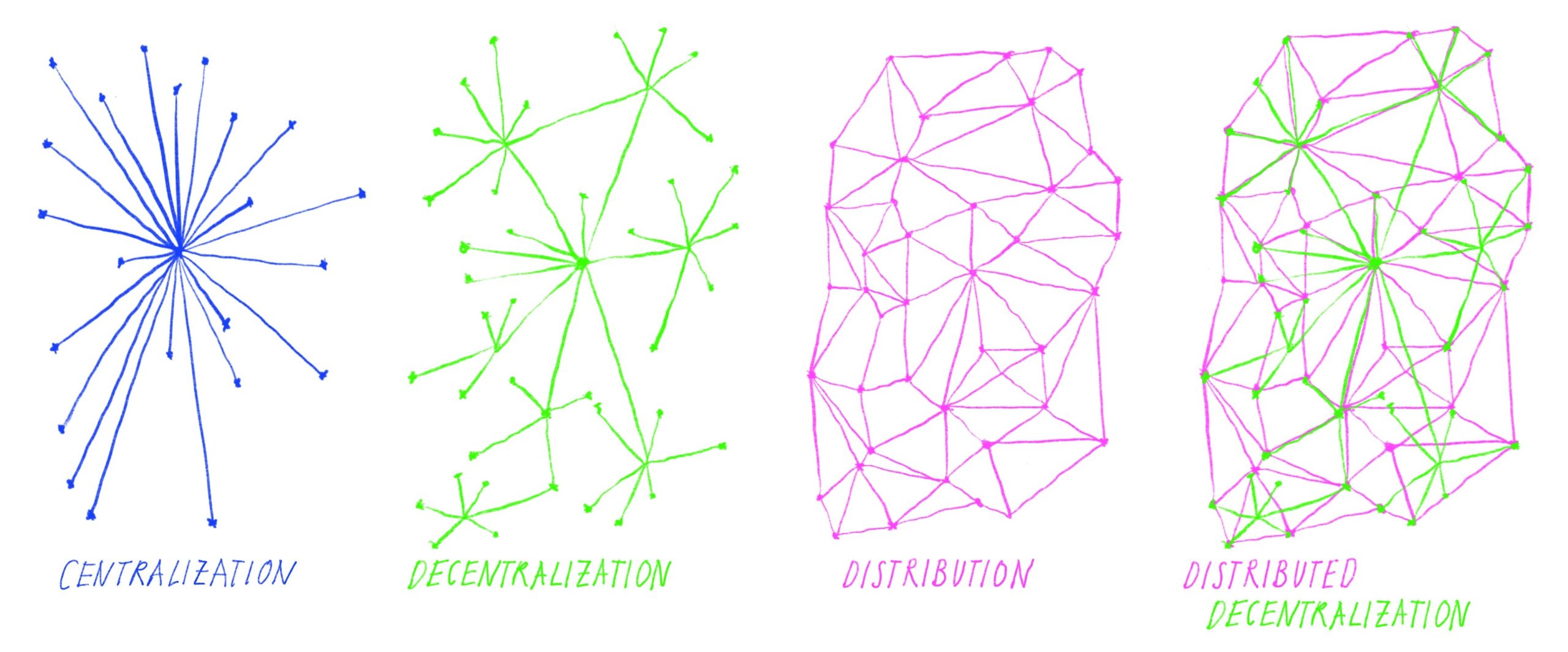
Additionally, investigate Multi-Agent Reinforcement Learning (MARL). By allowing multiple, localized risk-sensitive controllers to communicate with one another, you can create an emergent, self-healing grid that functions similarly to a biological nervous system, where localized damage is compensated for by neighboring nodes without needing a central command center.
Conclusion
Risk-sensitive closed-loop neurostimulation algorithms represent a paradigm shift from traditional, rigid control systems to dynamic, resilient, and bio-inspired energy management. By prioritizing the mitigation of tail-risk and utilizing real-time feedback, these systems offer a pathway to a more reliable energy future.
The key takeaway is that robustness is not about eliminating all volatility, but about managing it intelligently. Whether you are managing a microgrid or an entire national infrastructure, the principles of neurostimulation provide a powerful toolkit for maintaining homeostasis in an increasingly complex and high-stakes energy landscape.