
Uncategorized
-

Test financial AI models against extreme “black swan” scenarios to evaluate system resilience.
Stress-Testing Financial AI: Preparing Models for the Next Black Swan Introduction In the world of finance, the “Black Swan”—a term popularized by Nassim Nicholas Taleb—refers to an unpredictable event with extreme impact that defies conventional expectation. From the 2008 liquidity crisis to the rapid market disintegration during the early days of the COVID-19 pandemic, history…
-

Public-private partnerships leverage technical expertise to inform evidence-based policy development.
Bridging the Gap: How Public-Private Partnerships Drive Evidence-Based Policy Introduction For decades, the divide between the public and private sectors has been characterized by mutual suspicion. Governments often view corporations as profit-driven entities detached from social equity, while businesses frequently perceive bureaucracy as an obstacle to innovation. However, modern governance is increasingly complex, involving intricate…
-

Prevent “black box” outcomes in loan approval processes by requiring featureimportance reports.
Eliminating the Black Box: How Feature Importance Reports Transform Loan Approvals Introduction For decades, the lending industry relied on human intuition and traditional credit scores. Today, machine learning models have replaced those manual processes, offering the ability to ingest thousands of data points in milliseconds. While this shift has increased speed and lowered operational costs,…
-

Establishing global safety norms discourages a “race to the bottom” in terms of ethical standards.
Outline Introduction: Defining the “Race to the Bottom” and why global safety standards are the only firewall against ethical erosion. The Mechanics of Ethical Competition: How regulatory arbitrage incentivizes corners-cutting and the Prisoner’s Dilemma of corporate responsibility. The Pillars of Global Norms: Transparency, interoperability, and collective enforcement. A Step-by-Step Guide to Institutionalizing Standards: From industry…
-

Policy integration minimizes the regulatory burden on companies operating in multiple jurisdictions.
Contents 1. Introduction: Define the “regulatory thicket” and the hidden costs of fragmented compliance. 2. Key Concepts: Define Policy Integration (PI) and Regulatory Harmonization. Explain why “Compliance by Design” matters. 3. Step-by-Step Guide: Establishing a centralized policy framework, risk mapping, and modular policy architecture. 4. Examples/Case Studies: A multinational tech firm streamlining data privacy (GDPR/CCPA/LGPD)…
-

Maintain comprehensive audit trails for all automated financial transactions and recommendations.
Outline Introduction: The shift to automated finance and why “black box” algorithms are a liability. Key Concepts: Defining audit trails, immutability, and transactional transparency. Step-by-Step Guide: Architecting a robust logging infrastructure. Examples: Automated trading execution and AI-driven credit scoring. Common Mistakes: Overlooking log retention, lack of data integrity, and fragmented silos. Advanced Tips: Moving toward…
-

Use synthetic data generation to test the robustness of financial models without risking assets.
Outline Introduction: The limitations of historical financial data and the rise of synthetic data as a sandbox for risk management. Key Concepts: Defining synthetic data, generative adversarial networks (GANs), and the concept of “statistical fidelity.” Step-by-Step Guide: The architectural process of generating, validating, and testing data. Real-World Applications: Stress testing, fraud detection, and algorithmic trading.…
-

Long-term risk management involves periodic stress-testing of AI systems against emergent threats.
The Evolution of AI Resilience: Why Periodic Stress-Testing is Your Best Defense Introduction Artificial Intelligence is no longer a peripheral experiment; it is the engine driving modern infrastructure, financial markets, and healthcare logistics. However, as AI systems grow in complexity, they also inherit a unique vulnerability: they are “black boxes” that behave unpredictably when faced…
-
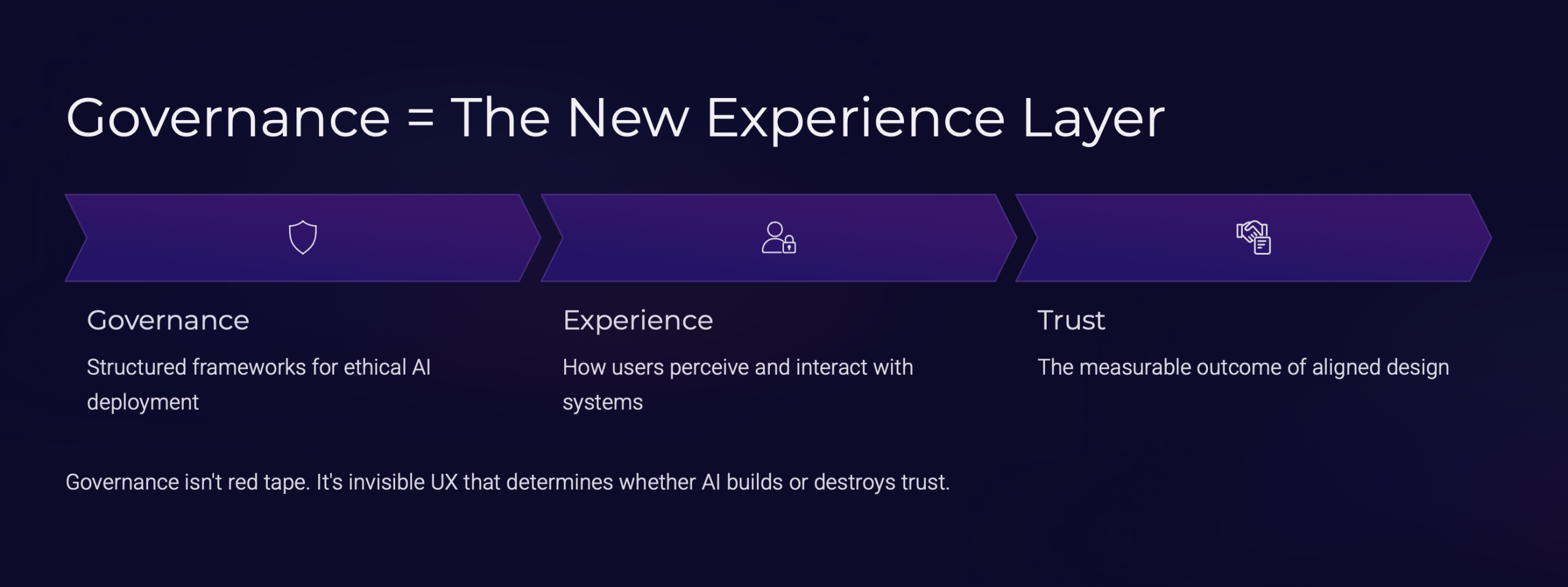
Governance structures must be flexible enough to accommodate the rapid evolution of autonomous systems.
The Imperative of Adaptive Governance: Governing Autonomous Systems in a State of Perpetual Flux Introduction We are currently navigating a paradigm shift where software is no longer just a tool, but an autonomous agent. From algorithmic trading desks and self-driving fleets to AI-driven diagnostic tools, autonomous systems are increasingly making high-stakes decisions with minimal human…
-

Implement real-time monitoring for anomaly detection in automated high-frequency trading.
Outline Introduction: The high-stakes environment of HFT and why traditional monitoring falls short. Key Concepts: Defining Anomaly Detection (Statistical vs. ML), Latency requirements, and “Data Drift.” Step-by-Step Guide: Architecture design, data pipelines (Kafka/Flink), model selection, and alerting thresholds. Case Studies: The “Flash Crash” scenario and algorithmic rogue behavior mitigation. Common Mistakes: Overfitting, alert fatigue, and…