
Uncategorized
-

Periodic stress tests evaluate model stability under edge-case conditions that were not represented in the training set.
Outline Main Title: Beyond Training Data: Why Periodic Stress Testing is Your Model’s Best Defense Introduction: Defining the “Stability Gap” between training performance and real-world resilience. Key Concepts: Understanding OOD (Out-of-Distribution) data, edge cases, and catastrophic forgetting. Step-by-Step Guide: Building a rigorous stress testing pipeline. Case Studies: Analyzing financial fraud detection and autonomous navigation failures.…
-

Regulatory compliance documentation is generated automatically from the output of the audit pipeline.
Contents 1. Introduction: The paradigm shift from manual audit reporting to “Compliance-as-Code.” Why static documentation is obsolete. 2. Key Concepts: Defining the Audit Pipeline and automated document generation. Understanding the bridge between raw evidence and regulatory frameworks (SOC2, ISO 27001, HIPAA). 3. Step-by-Step Guide: How to build a pipeline that feeds into an automated generator.…
-
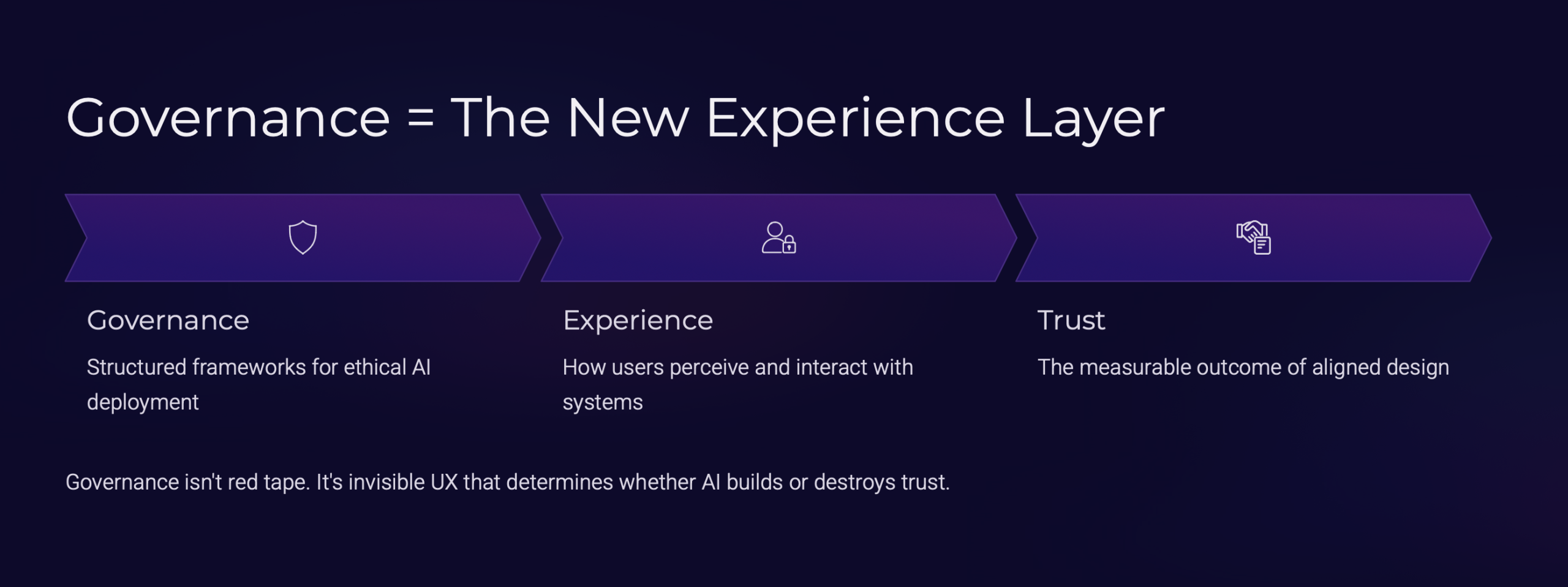
Governance structures mandate that safety engineers have the authority to halt deployments based on audit failures.
Contents 1. Main Title: The Safety Veto: Why Empowering Engineers is Essential for Resilient Governance 2. Introduction: Bridging the gap between velocity and safety. 3. Key Concepts: Defining the “Stop-Work Authority” (SWA) and its role in governance. 4. Step-by-Step Guide: How to implement a formal halt-deployment mechanism. 5. Case Studies: Real-world failures (e.g., aerospace and…
-

Independent third-party verification provides an objective assessment of whether model behaviors align with safety constraints.
Independent Third-Party Verification: The Gold Standard for AI Safety Introduction As artificial intelligence systems transition from experimental curiosities to foundational infrastructure for finance, healthcare, and critical governance, the stakes for reliability have never been higher. When a developer claims their model is “safe,” they are essentially grading their own homework. In the complex world of…
-
AI safety audits require a structured framework that moves beyond abstract policy toward verifiable technical outcomes.
The Shift from Policy to Proof: Why AI Safety Audits Must Become Verifiable Technical Frameworks Introduction For years, the discourse around AI safety has been dominated by abstract policy documents, ethical manifestos, and high-level governance frameworks. While these declarations are foundational, they suffer from a significant “implementation gap.” An AI model’s commitment to fairness or…
-

———.
Since you did not specify a topic, I have selected a high-impact, professional topic: “Strategic Deep Work: Mastering Focused Execution in a Distracted World.” *** Outline Introduction: The crisis of fragmented attention. Key Concepts: Defining Deep Work vs. Shallow Work. Step-by-Step Guide: Implementing a Deep Work ritual. Examples: Case studies of high-performance professionals. Common Mistakes:…
-

White-box testing allows for deep access to model parameters and gradient flows for comprehensive vulnerability scans.
White-Box Testing: Unlocking the Full Security Potential of AI Models Introduction As Artificial Intelligence (AI) and Machine Learning (ML) systems become the backbone of critical infrastructure—from financial fraud detection to autonomous driving—the stakes for their security have never been higher. While black-box testing treats a model as a mysterious “oracle” that only yields outputs for…
-

External auditors utilize black-box testing to assess model performance without prior knowledge of internal weights.
The Black-Box Advantage: Auditing AI Models Without Looking Under the Hood Introduction In the rapidly evolving landscape of artificial intelligence, transparency is often touted as the “holy grail” of model deployment. However, for external auditors and third-party risk managers, accessing the internal weights, hyper-parameters, or source code of a proprietary model is frequently impossible due…
-

Building a unified strategic culture is the ultimate safeguard against the risks of rapid AI adoption. Technical Mechanics of AI Safety Auditing and Compliance
Contents 1. Introduction: Defining the paradox of AI speed vs. safety and why culture acts as the “operating system” for risk management. 2. Key Concepts: Deconstructing AI Safety Auditing (Technical, Ethical, and Procedural) and the definition of a Unified Strategic Culture. 3. Step-by-Step Guide: Implementing a framework for continuous auditing. 4. Examples: Case studies on…
-

Regulatory transparency encourages innovation by providing clear rules of engagement for developers.
Regulatory Transparency: The Catalyst for Sustainable Tech Innovation Introduction For years, the technology sector operated under the mantra of “move fast and break things.” While this mindset fueled rapid growth, it created an increasingly volatile relationship between developers and policymakers. Today, the pendulum has swung toward heavy regulation, leaving many innovators in a state of…