
Uncategorized
-

External auditors utilize black-box testing to assess model performance without prior knowledge of internal weights.
The Auditor’s Advantage: Mastering Black-Box Testing for AI Model Validation Introduction In an era where machine learning models influence critical decisions—from loan approvals to medical diagnoses—the “black box” nature of artificial intelligence has become a significant liability. When internal logic is opaque, stakeholders cannot simply take a model’s output at face value. This is where…
-

Organizations must implement robust encryption protocols to maintain data integrity across disparate jurisdictional boundaries.
Outline Introduction: The challenge of data sovereignty in a globalized economy. Key Concepts: Defining encryption, data integrity, and jurisdictional challenges (GDPR, CCPA, etc.). Strategic Implementation: A step-by-step framework for cross-border encryption. Case Studies: Analyzing real-world applications in fintech and multinational healthcare. Common Mistakes: Pitfalls like key mismanagement and “shadow IT.” Advanced Tips: Zero-knowledge architecture and…
-

Safety-critical updates are gated by rigorous regression testing to ensure no loss of alignment during maintenance.
Safety-Critical Updates: Maintaining Alignment Through Rigorous Regression Testing Introduction In software engineering, the phrase “move fast and break things” is a relic of a bygone era. In safety-critical systems—ranging from autonomous vehicle controllers and medical diagnostic software to grid-level energy management—breaking things is not an option; it is a liability. As these systems evolve through…
-
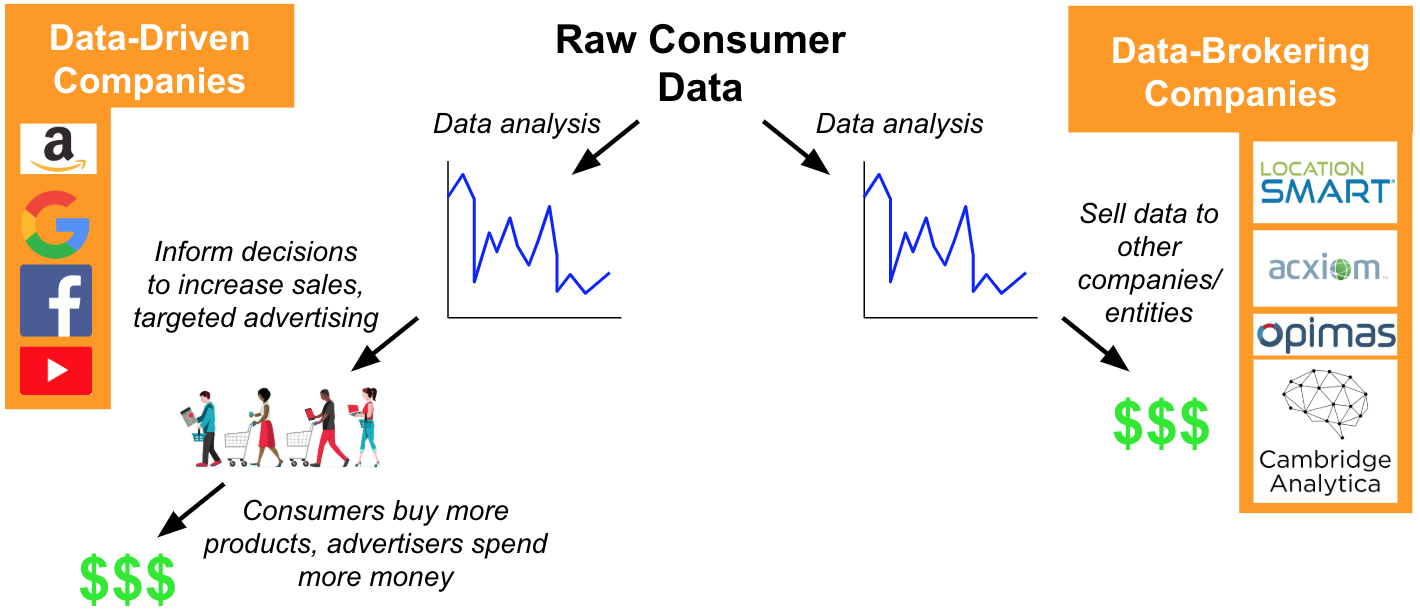
Data localization mandates often complicate the use of decentralized cloud infrastructure for global model development.
Contents 1. Introduction: The collision between the borderless nature of AI development and the territorial nature of data sovereignty. 2. Key Concepts: Defining decentralized cloud infrastructure (DePIN/Edge computing) and data localization mandates (GDPR, CCPA, etc.). 3. The Conflict: Why decentralized models struggle when data cannot cross borders. 4. Step-by-Step Guide: How to architect compliant global…
-

Penetration testing of the model’s API endpoints prevents unauthorized access or manipulation of safety guardrails.
Securing AI Infrastructure: Penetration Testing Model API Endpoints Introduction The rapid proliferation of Large Language Models (LLMs) and generative AI applications has fundamentally changed the software development landscape. While organizations are quick to integrate these models into their products via API, security often takes a backseat to functionality. This creates a critical oversight: if an…
-

Cross-border data sovereignty requires strict adherence to local regulations like GDPRduring model training.
Outline Introduction: The collision of AI scalability and territorial data laws. Key Concepts: Defining data sovereignty, the GDPR’s reach, and the “Black Box” dilemma. Step-by-Step Guide: Implementing privacy-preserving machine learning (PPML) architectures. Case Studies: Healthcare (federated learning) and Finance (synthetic data). Common Mistakes: The pitfalls of assuming “anonymization” equals “compliance.” Advanced Tips: Moving from legal…
-

Aligning internal audits with ISO standards helps organizations demonstrate due diligence to global regulators.
The Strategic Imperative: Aligning Internal Audits with ISO Standards to Demonstrate Due Diligence Introduction In an era defined by heightened regulatory scrutiny and complex global supply chains, the ability to prove that an organization is operating ethically and securely is no longer optional—it is a competitive necessity. Regulators across jurisdictions, from the GDPR in Europe…
-
Adversarial training regimens are standardized to improve model resilience against known attack vectors.
Contents 1. Introduction: The vulnerability of machine learning models to “imperceptible” noise and why standard training is no longer enough. 2. Key Concepts: Defining Adversarial Training (AT), the Min-Max optimization problem, and the “Cat-and-Mouse” game of robustness. 3. Step-by-Step Guide: How to implement robust training loops using Projected Gradient Descent (PGD). 4. Examples/Case Studies: Autonomous…
-

Reward model calibration is audited to prevent alignment drift during reinforcement learning from human feedback (RLHF).
Outline Introduction: Defining the challenge of RLHF and why the reward model is a “moving target.” Key Concepts: Reward model calibration vs. drift; understanding the feedback loop. The Audit Process: A step-by-step framework for monitoring model behavior. Real-World Applications: How enterprise-scale LLM deployments manage alignment drift. Common Mistakes: Overfitting to reward, reward hacking, and stale…
-

Post-market monitoring systems are essential for detecting emerging risks once an AImodel is deployed commercially.
Outline Introduction: The shift from “model training” to “model living” in the real world. Key Concepts: Defining AI drift, data distribution shift, and the feedback loop. Step-by-Step Guide: Setting up a production monitoring framework (Observability, Evaluation, Response). Case Studies: Clinical diagnostic AI drift and Financial credit scoring anomalies. Common Mistakes: Over-reliance on static benchmarks and…