
Uncategorized
-

Model pruning reduces the surface area for adversarial exploitation by removing redundant parameters.
Model Pruning as a Defense: Reducing the Attack Surface for Adversarial Exploitation Introduction In the landscape of modern artificial intelligence, deep learning models are often judged by their sheer scale. We build systems with billions of parameters, assuming that “bigger is better” for accuracy. However, this pursuit of scale has created a hidden vulnerability: over-parameterization.…
-

The concept of “state of the art” in AI safety is used as a legal benchmark for negligence claims.
The Legal Threshold of AI Safety: Understanding “State of the Art” as a Benchmark for Negligence Introduction As Artificial Intelligence systems transition from experimental research labs into the backbone of global infrastructure, the legal framework governing their deployment is undergoing a seismic shift. For developers, C-suite executives, and legal counsel, the most critical concept to…
-

Auditing processes should prioritize the verification of training data provenance to avoid copyright and privacy pitfalls.
Contents 1. Introduction: The shift from model performance to data integrity as the primary risk factor. 2. Key Concepts: Defining data provenance, the “Black Box” problem, and why “garbage in, garbage out” now includes “lawsuits in, liabilities out.” 3. Step-by-Step Guide to Auditing Provenance: A structured workflow from ingestion mapping to PII sanitization. 4. Real-World…
-
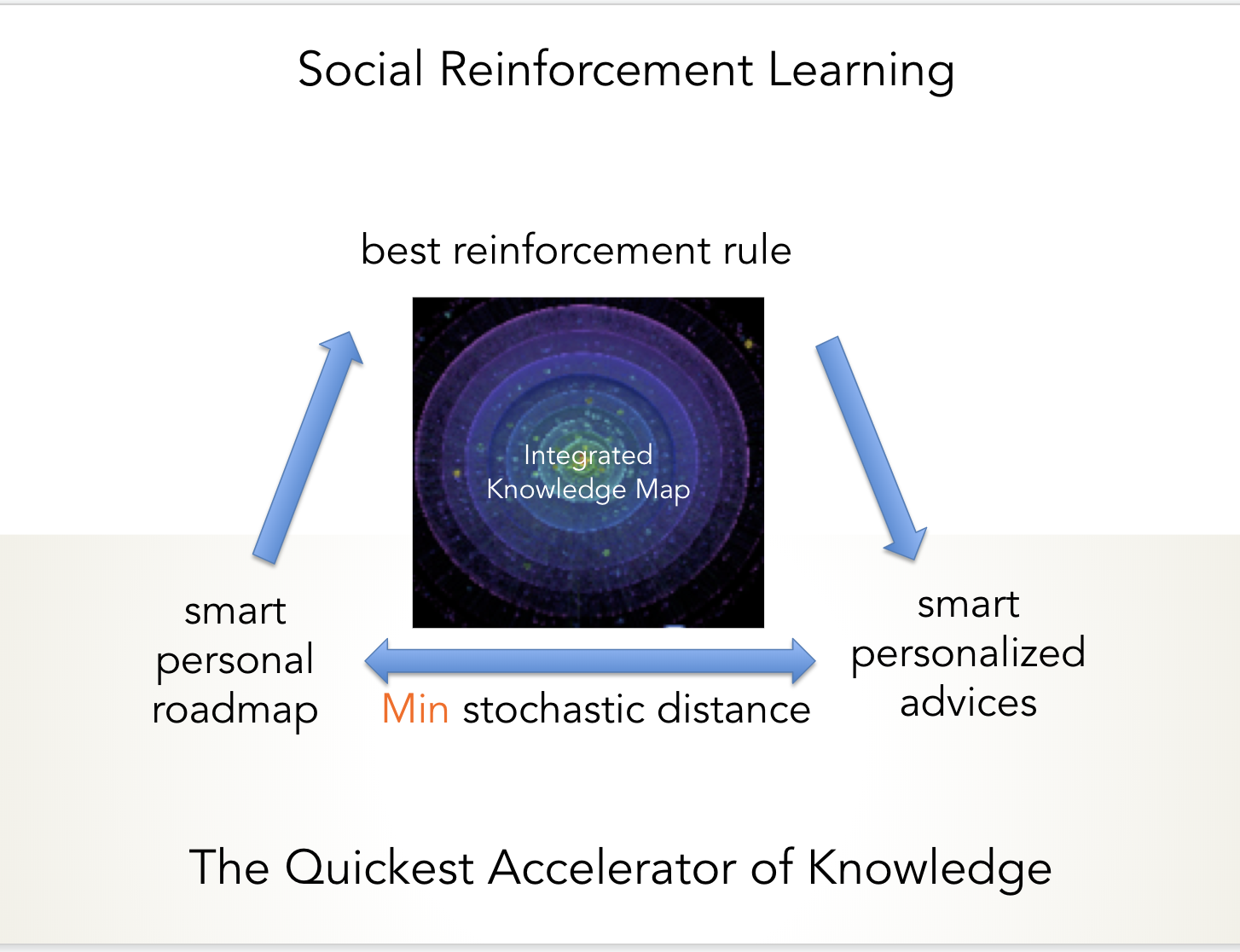
Reinforcement Learning from Human Feedback (RLHF) aligns model behavior with predefined safety benchmarks.
The Architecture of Alignment: Mastering Reinforcement Learning from Human Feedback (RLHF) Introduction For years, the development of Large Language Models (LLMs) was akin to training a brilliant but unruly student. These models could process vast amounts of data, yet they often exhibited erratic, biased, or harmful behavior. The turning point in AI safety was the…
-

Bias mitigation strategies must be documented to satisfy fairness mandates within various legal jurisdictions.
Bias Mitigation Documentation: Compliance and Accountability in Algorithmic Decision-Making Introduction As algorithmic systems become the gatekeepers for credit, employment, housing, and healthcare, the demand for “fairness” has shifted from a philosophical ideal to a rigid legal mandate. Regulatory bodies across the globe—most notably the European Union with the AI Act and the United States through…
-
Differential privacy techniques protect sensitive training data from being reconstructed during inference.
Securing Data Privacy: How Differential Privacy Prevents Model Inversion Introduction In the era of large-scale machine learning, models are increasingly being trained on sensitive information, ranging from medical records and financial histories to private communication logs. While we often worry about data breaches during storage, a more insidious threat exists: model inversion attacks. These attacks…
-

Model constraints are implemented during the training phase to enforce adherence to safety guidelines.
Contents 1. Introduction: The paradigm shift from post-training safety to “Safety by Design.” 2. Key Concepts: Understanding objective functions, loss functions, and constraint-based optimization (Lagrangian methods). 3. Step-by-Step Guide: How data curation, architectural constraints, and reward modeling integrate into the training loop. 4. Real-World Applications: Healthcare diagnostics, autonomous systems, and finance. 5. Common Mistakes: Over-regularization…
-

Explainability requirements demand that developers provide accessible justifications for automated outcomes to the public.
Contents 1. Introduction: The “black box” crisis in modern AI and the shifting demand for transparency. 2. Key Concepts: Defining Explainable AI (XAI) and why justification is a fundamental requirement, not a feature. 3. Step-by-Step Guide: How to build explainability into the development lifecycle. 4. Real-World Applications: Financial services (loan denials) and Healthcare (diagnostic assistance).…
-

Safety engineering requires the integration of guardrails that intercept and filter prohibited output content.
Outline Main Title: Architecting Trust: Implementing Robust Guardrails in AI Safety Engineering Introduction: The shift from reactive safety to proactive structural integrity in Large Language Models (LLMs). Key Concepts: Defining input filtering, output interception, and the “Defense in Depth” model. Step-by-Step Guide: A technical roadmap for deploying a multi-layered filtering architecture. Examples: Analyzing PII masking,…
-

Cybersecurity frameworks must be integrated into AI safety protocols to prevent adversarial attacks on models.
Contents 1. Introduction: The collision of traditional cybersecurity and generative AI, highlighting the urgency of shifting from “model performance” to “model resilience.” 2. Key Concepts: Defining Adversarial Machine Learning (AML), data poisoning, and model inversion as the new threat vectors. 3. Step-by-Step Guide: Implementing a security-first integration framework (the “Security-by-Design” approach for AI). 4. Examples/Case…