
Environment
-

Topology-Aware Secure Multiparty Computation for Geoengineering: A New Paradigm for Climate Governance
Introduction The field of geoengineering—deliberate, large-scale intervention in the Earth’s natural systems to counteract climate change—is inherently fraught with tension. Whether discussing stratospheric aerosol injection or marine cloud brightening, the primary challenge is not merely technical feasibility, but global trust and governance. Who controls the thermostat? How do we ensure that data regarding sensitive climate…
-

Bio-Inspired Climate Adaptation: The Future of Resilient Bioelectronics
Introduction The convergence of biology and electronics is no longer confined to the pages of science fiction. As we push the boundaries of wearable health monitors, implantable sensors, and neural interfaces, we face a significant engineering bottleneck: environmental fragility. Conventional electronics are rigid, sensitive to thermal fluctuations, and prone to oxidative stress—the very conditions the…
-

Symbol-Grounded Carbon Removal: The Nanotechnology Frontier
Introduction The climate crisis is no longer a distant theoretical threat; it is an active engineering challenge. While traditional carbon capture and storage (CCS) methods—such as massive underground sequestration and post-combustion scrubbers—have provided a baseline, they are often energy-intensive and geographically constrained. The next evolution in atmospheric remediation lies at the intersection of artificial intelligence…
-

Powering the Future: The Role of Energy-Aware Solid-State Battery Simulators in Climate Tech
Introduction The global transition to renewable energy hinges on one critical bottleneck: energy storage. While lithium-ion batteries have powered the digital revolution, they are reaching their theoretical limits in terms of energy density, safety, and cycle life. Solid-state batteries (SSBs) represent the next frontier, promising higher capacity and enhanced safety by replacing liquid electrolytes with…
-
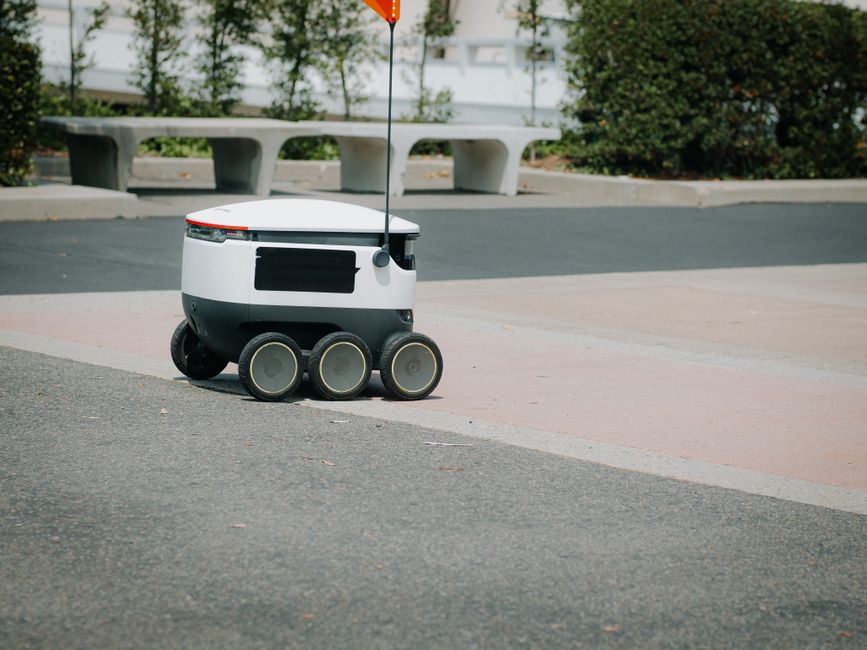
Zero-Shot Cellular Robotics: The Future of Autonomous Energy Infrastructure
Introduction The modern energy grid is no longer a static network of wires and transformers; it is a complex, volatile ecosystem of distributed generation, battery storage, and fluctuating demand. As we transition toward decentralized renewable energy, the primary bottleneck is not just power generation, but grid orchestration. Traditional centralized control systems are too slow and…
-

Risk-Sensitive Generative Simulation Algorithms: Hardening Energy Systems Against Uncertainty
Introduction The global energy transition is moving us toward a decentralized, stochastic grid. As we integrate higher percentages of intermittent renewables like solar and wind, the traditional methods of grid management—relying on deterministic load forecasting—are becoming obsolete. When a cloud bank moves over a solar farm or a sudden heatwave spikes residential cooling demand, the…
-

Human-in-the-Loop Climate Adaptation: Navigating the Neuroethical Frontier
Introduction As the climate crisis accelerates, the pressure to deploy large-scale technological interventions—ranging from geoengineering to AI-driven resource allocation—has never been higher. However, we are moving toward a future where our psychological capacity to process environmental trauma and adapt to rapid change is being outpaced by the speed of the crisis itself. This is where…
-

Self-Evolving Carbon Removal Platforms: The Future of Bioelectronic Integration
Introduction The convergence of biotechnology and electronics—known as bioelectronics—is currently undergoing a radical transformation. Historically, these systems were rigid, external, and often invasive. Today, we are witnessing the emergence of self-evolving carbon removal platforms. These are not merely passive sensors; they are dynamic, adaptive systems that utilize carbon-based materials to actively remediate environmental toxins or…
-

Graph-Based Protein Design: Engineering the Future of Sustainable Energy
Introduction The global transition to sustainable energy is no longer just a matter of scaling solar panels and wind turbines. To reach net-zero targets, we must master the molecular machinery of life itself. Nature has spent billions of years perfecting proteins—complex biological machines capable of catalysis, light-harvesting, and energy storage. However, natural proteins are not…
-

Causality-Aware TinyML: The Future of Precision Geoengineering
Introduction As the climate crisis accelerates, the scientific community is moving beyond mere observation toward active intervention. Geoengineering—the deliberate large-scale manipulation of the Earth’s natural systems—requires unprecedented levels of precision. If we are to modify atmospheric or oceanic conditions, we must understand not just correlations in climate data, but the causal mechanisms that drive them.…