
Contents
1. Introduction: Defining the “Uncertainty Gap” in modern supply chains and why deterministic models are failing.
2. Key Concepts: Understanding Uncertainty Quantification (UQ) and its role in Edge/IoT edge-case management.
3. The Benchmark Framework: Core metrics for measuring resilience (Latency, Reliability, Prediction Intervals).
4. Step-by-Step Guide: Implementing a UQ-ready architecture for IoT sensor networks.
5. Case Study: Predictive maintenance in automated logistics centers.
6. Common Mistakes: Over-reliance on point forecasts and ignoring edge-compute constraints.
7. Advanced Tips: Utilizing Bayesian Neural Networks and Conformal Prediction for real-time adjustments.
8. Conclusion: Moving from reactive to probabilistic supply chain management.
—
Quantifying the Unknown: Building a Supply Chain Resilience Benchmark for Edge/IoT
Introduction
Modern supply chains are no longer linear; they are hyper-connected webs of data flowing from thousands of IoT sensors, autonomous vehicles, and edge-computing nodes. Yet, the primary flaw in most supply chain management systems remains their reliance on deterministic forecasting. They provide a single “best guess” for demand, transit times, or inventory levels.
In a world characterized by volatility, a single-point forecast is a liability. If your IoT-enabled warehouse management system ignores the uncertainty behind its sensor data, it will fail when the unexpected occurs. To build true resilience, organizations must shift toward uncertainty-quantified benchmarks. This article explores how to integrate probabilistic modeling into your edge/IoT architecture to create a system that doesn’t just predict the future, but measures its own confidence in that prediction.
Key Concepts: The Intersection of UQ and IoT
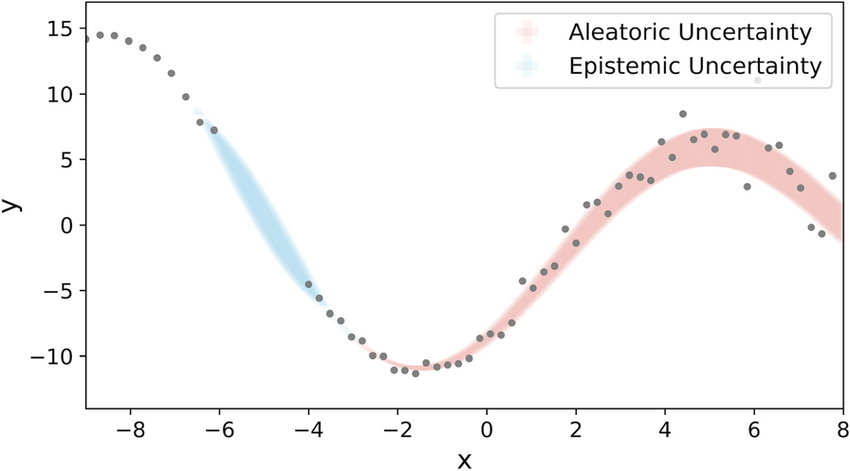
Uncertainty Quantification (UQ) is the process of characterizing and reducing both aleatoric (data-driven) and epistemic (model-driven) uncertainty. In an IoT context, this means that every data point—be it a temperature reading from a cold-chain truck or a vibration signature from a conveyor belt—comes with a “confidence band” rather than a fixed value.
When we apply UQ to supply chain resilience, we move away from asking “When will this shipment arrive?” and start asking, “What is the 95% probability interval for this shipment’s arrival, and how does the edge-compute node’s current network latency affect that interval?” By quantifying this uncertainty at the edge, you enable localized decision-making that is aware of its own limitations.
Step-by-Step Guide: Implementing a UQ-Ready Benchmark
To establish a benchmark for resilience, you must move from static KPIs to dynamic, uncertainty-aware metrics.
- Audit Data Provenance and Noise: Identify which IoT sensors provide high-confidence data and which are prone to environmental interference. Calculate the signal-to-noise ratio at the edge node level.
- Deploy Probabilistic Forecasting Models: Replace standard linear regression or basic deep learning models with architectures capable of outputting probability distributions (e.g., Gaussian Process Regression or Quantile Regression).
- Define the Uncertainty Budget: Establish a threshold for acceptable uncertainty. If the model’s confidence interval for a critical inventory reorder point exceeds a specific variance, the system must trigger a “human-in-the-loop” flag.
- Edge-Compute Calibration: Ensure that your edge devices have the computational overhead to calculate confidence intervals locally. Use lightweight quantization techniques to ensure UQ doesn’t spike latency.
- Continuous Benchmarking: Measure the “Calibration Error” of your system. If your model claims a 95% confidence interval, it should be correct 95% of the time. If it is only correct 80% of the time, the model is overconfident and requires re-calibration.
Real-World Application: Predictive Maintenance in Logistics
Consider a large-scale automated logistics hub utilizing thousands of IoT vibration sensors on robotic sorters. A traditional system might trigger a maintenance alert if a sensor detects a vibration above a fixed threshold. This leads to “alert fatigue” and unnecessary downtime.
By implementing a UQ benchmark, the system analyzes the vibration data and calculates the uncertainty of the failure prediction. If the system detects a vibration anomaly but notes that the sensor’s data has high noise due to current ambient temperature, it increases the confidence interval. The maintenance team receives an alert that says, “Failure likely in 48 hours (Confidence: 65%).” This allows managers to prioritize repairs based on actual risk rather than binary triggers, effectively building resilience into the maintenance schedule.
Common Mistakes to Avoid
- Ignoring Epistemic Uncertainty: Many developers focus only on data noise (aleatoric) while ignoring model ignorance (epistemic). If your model is being fed data it hasn’t seen before, it must be programmed to admit it doesn’t know the answer.
- Over-centralizing Compute: Sending raw sensor data to the cloud for uncertainty analysis introduces latency that makes the insights useless for real-time supply chain adjustments. UQ must happen at the edge.
- Treating Thresholds as Constants: Resilience benchmarks should be dynamic. A “safe” uncertainty threshold during a calm quarter should be significantly tighter during peak holiday shipping seasons.
Advanced Tips for Edge Resilience
To truly master uncertainty-quantified resilience, look into Conformal Prediction. This is a powerful framework that produces valid prediction intervals with a guaranteed coverage probability, regardless of the underlying machine learning algorithm. By wrapping your existing IoT models in a conformal prediction layer, you can provide mathematically grounded confidence levels without needing to retrain your entire model.
Additionally, prioritize “Edge-Aware UQ.” This involves training your models not just on the sensor data, but on the metadata of the network itself. If your edge-node is experiencing packet loss or high jitter, the model should automatically widen its uncertainty bands to reflect the lower quality of incoming information.
“Resilience is not the absence of error, but the ability to operate effectively despite the presence of uncertainty. By quantifying that uncertainty, we turn our greatest vulnerability—the unknown—into a manageable risk factor.”
Conclusion
The transition to uncertainty-quantified supply chain resilience is no longer an optional upgrade; it is a competitive necessity. As supply chains become more reliant on IoT and edge computing, the ability to interpret data in terms of probabilities rather than absolutes will differentiate the leaders from the laggards.
By shifting your benchmarking focus from “accuracy” to “calibration,” and by moving the computation of that uncertainty to the edge, you create a supply chain that is inherently adaptive. Start by auditing your current sensor data, implement lightweight probabilistic models, and ensure your decision-making processes are tuned to account for the “confidence” of every insight. The future of the supply chain is not in predicting the future perfectly—it is in understanding exactly how much you don’t know.

Leave a Reply