

The Architecture of Trust: Balancing Energy Efficiency and Byzantine Fault Tolerance
Introduction
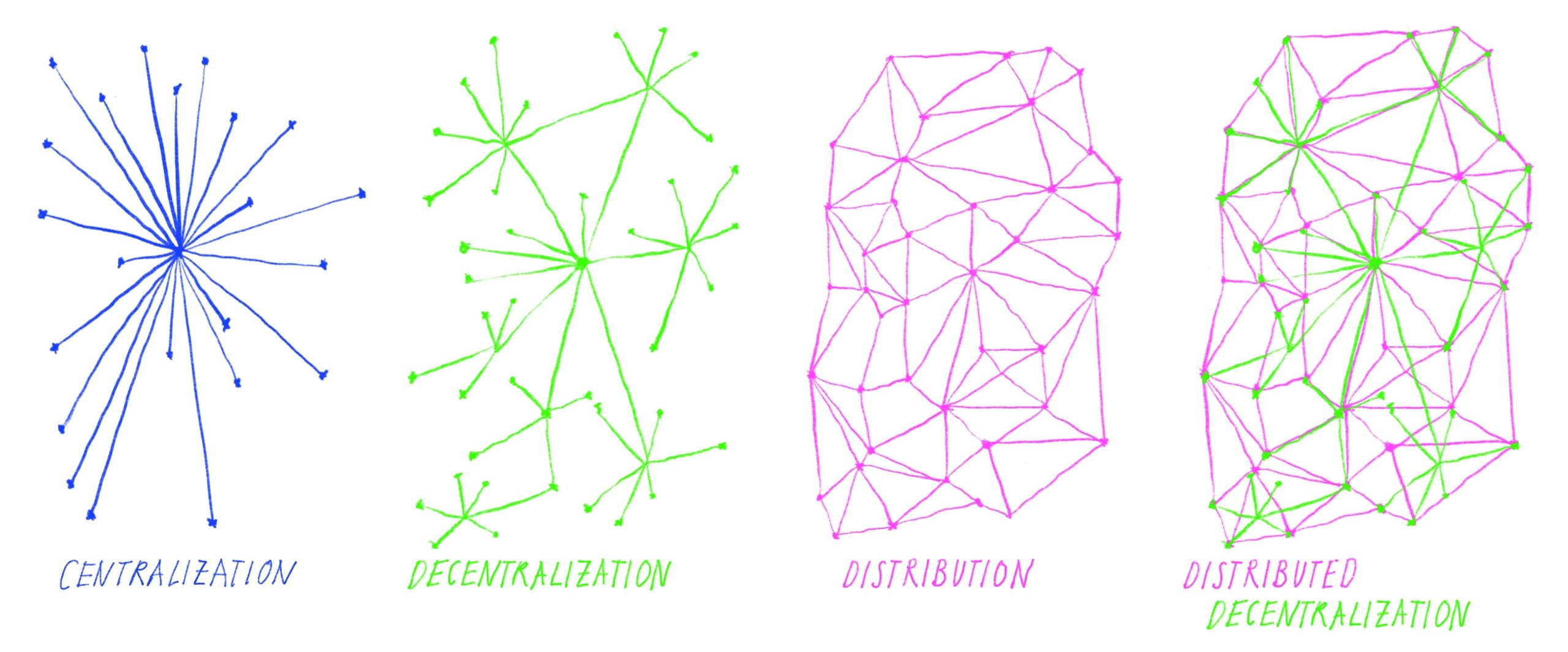
At the heart of every decentralized network lies a fundamental paradox: how do you achieve universal agreement among anonymous, potentially malicious actors without a central authority? This challenge is known as the Byzantine Generals Problem. To solve it, blockchain networks employ consensus mechanisms—the protocols that dictate how nodes agree on the state of a ledger.
For years, the industry was defined by a binary trade-off. We could have extreme security through energy-intensive processes, or we could have efficiency at the risk of centralization. Today, the evolution of distributed ledger technology has moved beyond this dichotomy. Understanding how to balance energy efficiency with Byzantine Fault Tolerance (BFT) is no longer an academic exercise; it is the prerequisite for building scalable, sustainable, and secure digital infrastructure.
Key Concepts
To understand the balance, we must first define the two poles of the spectrum.
Byzantine Fault Tolerance (BFT)
BFT is the property of a system that allows it to continue functioning correctly even if some of its nodes fail or act maliciously. In a decentralized network, “malicious” could mean attempting a double-spend attack or censoring transactions. A system is BFT-compliant if it can reach consensus as long as a specific threshold of nodes—usually two-thirds of the network—are honest.
Energy Efficiency
Energy efficiency measures the computational work required to secure the network. Proof of Work (PoW), the original consensus mechanism, requires massive amounts of electricity to solve cryptographic puzzles. While highly secure, its environmental footprint is significant. Modern alternatives focus on reducing the “work” required to reach consensus, shifting the burden from hardware and electricity to stake, reputation, or time-locked assets.
The Balancing Act
The core challenge is that security (BFT) typically relies on “cost.” In PoW, that cost is electricity. If you remove the cost, you risk a “Sybil attack,” where one actor creates millions of identities to take control of the network. Modern mechanisms must find a way to make the cost of attacking the network prohibitively high without requiring a literal power plant to maintain it.
Step-by-Step Guide: Evaluating a Consensus Mechanism
When assessing whether a protocol successfully balances BFT and efficiency, use this framework to audit its architecture.
- Identify the Validator Selection Process: Determine how the network chooses who gets to propose a block. If the selection is truly random and based on stake rather than raw computing power, the energy requirements drop significantly.
- Analyze the Finality Threshold: Look at how many nodes must sign off on a block for it to be considered “final.” A system that requires a supermajority (e.g., 67%) of staked tokens to reach finality is generally more BFT-robust than one relying on probabilistic finality.
- Audit the Slashing Conditions: Efficiency is useless if the network can be cheated. Check if the protocol includes “slashing”—a mechanism where malicious actors lose their staked capital. This creates an economic cost that replaces the energy cost of PoW.
- Evaluate Network Latency vs. Throughput: High-performance chains often increase throughput by limiting the number of active validators. Check if the “validator set” is large enough to remain decentralized, or if efficiency has been achieved by sacrificing the BFT requirement of a distributed, permissionless network.
Examples and Case Studies
The Proof of Stake (PoS) Transition: Ethereum
Ethereum’s transition from PoW to PoS is the definitive case study in this balancing act. By replacing energy-intensive mining with a staking model, Ethereum reduced its energy consumption by over 99.9%. To maintain BFT, Ethereum implemented a “Gasper” consensus protocol, which combines Casper FFG (finality gadget) with LMD GHOST. This allows the network to maintain high security through economic penalties (slashing) rather than raw electrical consumption.
Delegated Proof of Stake (DPoS): EOS and Solana
DPoS models prioritize extreme efficiency by electing a small, rotating group of delegates to validate transactions. While this achieves near-instant finality and minimal energy usage, it is often criticized for lower decentralization. These networks balance BFT by relying on the reputation and the high economic stake of the delegates, creating a high-speed system that is efficient but requires a careful balance of validator diversity to avoid becoming a “private server” structure.
Common Mistakes
- Confusing Throughput with Security: Many developers believe that faster block times equal a better network. However, if consensus is reached too quickly across too few nodes, the network is vulnerable to Byzantine actors. Speed is not a proxy for security.
- Ignoring the “Nothing-at-Stake” Problem: In early PoS designs, validators could sign multiple conflicting blocks at no cost. This undermined BFT. Modern systems must include explicit penalties for such behavior to ensure that the system remains Byzantine-tolerant.
- Over-centralization for Efficiency: Reducing the number of validators to increase speed makes the network more efficient but significantly weakens BFT. A network with only ten validators is easy to coordinate but trivial to censor or attack through collusion.
Advanced Tips
For those building or analyzing the next generation of consensus protocols, consider these advanced architectural nuances:
Use of Verifiable Random Functions (VRFs): To keep a network BFT-compliant without high energy, you need to prevent attackers from predicting who will be the next block proposer. VRFs allow nodes to prove their eligibility to propose a block without revealing their identity until the last possible moment, effectively neutralizing targeted DDoS attacks against validators.
Implementing Threshold Cryptography: By requiring a threshold of signatures to sign a block, you ensure that no single entity can control the state transition. This is a critical component in maintaining BFT in low-energy environments, as it forces collaboration even among smaller, decentralized nodes.
The Role of Economic Security: As we move away from energy-based security, the “cost” of an attack must be explicitly mapped to the total value staked on the network. If the cost of corrupting the network is lower than the potential gain from a double-spend, the protocol is fundamentally insecure, regardless of how energy-efficient it is.
Conclusion
The evolution of consensus mechanisms marks a shift from brute force to elegant engineering. We are moving toward a paradigm where security is derived from cryptography and game theory rather than the burning of fossil fuels. However, this transition requires a rigorous adherence to the principles of Byzantine Fault Tolerance.
True network security is not found in the amount of power consumed, but in the mathematical certainty that honest actors can reach consensus in the presence of those who would see the network fail.
To build or invest in sustainable blockchain infrastructure, prioritize protocols that use economic incentives, randomized validator selection, and robust slashing conditions. By balancing these factors, we can create networks that are not only environmentally responsible but also resilient enough to serve as the foundation for the next generation of global finance and digital identity.
Further Reading





Leave a Reply